
Table of Contents
- Electrical Safety Inspections for Older Homes: What Every Homeowner Should Know
- The Importance of Electrical Safety Inspections for Aging Properties
- What Happens During a Professional Electrical Safety Inspection?
- Preparing for an Electrical Safety Inspection: What to Expect and How to Plan
- Electrical Panel Upgrades and Knob-and-Tube Wiring: Critical Repairs for Older Homes
- Frequently Asked Questions About Electrical Safety Inspections for Older Homes
- Making Your Older Home Safer with Professional Electrical Inspections
Electrical Safety Inspections for Older Homes: What Every Homeowner Should Know
Every homeowner of an older property should prioritize an electrical safety inspection for older homes. Homes built before the 1990s often contain outdated wiring and components that pose hidden fire and shock hazards. A professional evaluation is the first step toward a safer, more reliable electrical system.
The most common hazards found in aging homes include knob-and-tube wiring, aluminum branch circuits, ungrounded outlets, and outdated fuse panels. According to the Electrical Safety Foundation International, older homes are three times more likely to experience an electrical fire, yet comprehensive inspections can reduce that risk by half. For authoritative guidance on older home electrical safety, ESFI recommends annual inspections for all homes built before 1990.
A typical inspection covers a thorough visual check of the wiring, panel, and outlets, along with thermal imaging to identify overheating components, load testing to verify circuit capacity, and a grounding system assessment. Only a licensed electrician should perform these evaluations to ensure code compliance. When the inspection uncovers deteriorated knob-and-tube wiring, a knob and tube wiring replacement is often the safest path forward to protect your home.
An inspection is a small investment that protects your home and family — with no hidden fees. If your panel can’t handle modern loads, an electrical panel upgrade may also be recommended. At High Voltage Electrical, our licensed electricians provide thorough safety inspections backed by a commitment to dependable, affordable high-quality electrical services. If you live in an older home in our service area, contact us for a detailed evaluation — Safety is our #1 priority. All inspections are performed by licensed electricians and meet current NEC codes.
The Importance of Electrical Safety Inspections for Aging Properties
For homeowners living in houses built before the 1980s, an electrical safety inspection for older homes is one of the most proactive steps you can take to protect your family and property. Aging wiring and outdated panels often hide hazards that can go unnoticed for years, and our licensed electricians at High Voltage Electrical are trained to spot the subtle warning signs that untrained eyes miss.
The following table summarizes typical wiring types and issues found in homes built during three distinct construction eras, helping you understand the inspection priorities for your property.
| Decade | Typical Wiring | Common Issues | Inspection Priority |
|---|---|---|---|
| 1920s-1940s | Knob-and-tube wiring | Deteriorated insulation, insufficient capacity, splices without junction boxes | Highest |
| 1950s | Cloth-covered NM cable (early Romex) | Aluminum wiring, asbestos in wire insulation, overloaded circuits | High |
| 1960s-1970s | Aluminum and copper NM cable | Aluminum wiring connections, undersized panels, lack of GFCI/AFCI protection | Moderate |
As the table illustrates, homes from the 1920s through the 1940s present the most urgent inspection needs. Knob-and-tube systems, which our technicians regularly encounter in California’s older neighborhoods, lack a ground wire and often have insulation that has crumbled over decades, leaving live conductors exposed. The 1950s brought cloth-covered NM cable, but many of those installations also used aluminum wiring and asbestos-infused insulation — two materials that can lead to dangerous overheating at connections when combined with modern electrical loads. Even homes built as recently as the 1960s and 1970s still need careful evaluation because aluminum wiring connections gradually loosen over time, and the absence of GFCI and arc-fault circuit interrupters raises the risk of shock and fire.
Understanding what inspectors look for helps you prepare for your appointment. When we perform an electrical safety inspection for older homes, we focus on each era’s signature vulnerabilities. For pre-1940s properties, that means tracing every inch of knob-and-tube wiring to identify splices made without junction boxes and circuits that are overloaded by today’s appliances. In 1950s homes, we pay special attention to switchgear and outlets where aluminum wiring may cause hot spots, and we check for brittle cloth insulation that can crumble at the slightest disturbance. Homes from the 1960s and 1970s require a close look at the main service panel; many still operate on 60-amp or 100-amp capacity that was never designed to handle contemporary kitchens, home offices, and EV chargers.
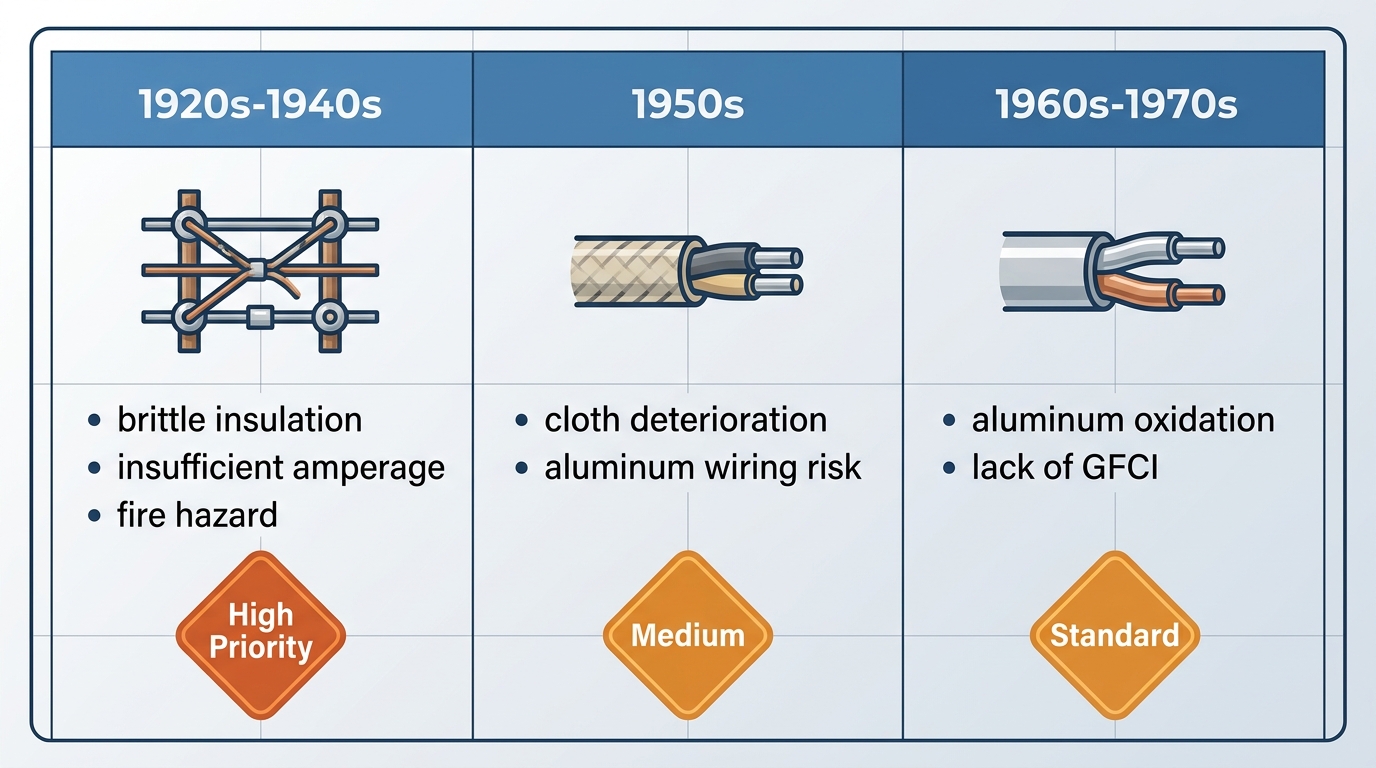
Electrical safety concerns compared across three home construction eras.
Based on typical findings, our inspectors frequently recommend corrective actions such as knob and tube wiring replacement or an electrical panel upgrade to bring the home up to modern safety standards. If your inspection uncovers outdated knob-and-tube wiring, our team specializes in whole house rewiring to deliver a safer, more reliable electrical system. We never pressure you into unnecessary work; every recommendation is grounded in what our licensed electricians physically observe and document.
Safety is our #1 priority. As Licensed Local Electricians You Can Trust, we advise scheduling an electrical safety inspection at least every five to ten years for any aging property, or immediately before purchasing a historic home. These inspections provide peace of mind and the information you need to make informed decisions about preserving your home’s character while meeting today’s electrical code requirements — all with the upfront, transparent approach that has made High Voltage Electrical a trusted partner for homeowners across California and Texas.
What Happens During a Professional Electrical Safety Inspection?
A professional electrical safety inspection for older homes is a systematic, methodical process designed to uncover hidden hazards before they become serious threats. At High Voltage Electrical, Safety is our #1 priority, so our Licensed Local Electricians You Can Trust follow a rigorous protocol that typically takes one to three hours to complete, depending on the size and age of your home. This detailed electrical audit leaves no wire, outlet, or connection unchecked, providing you with a clear picture of your system’s health and any needed improvements.
Inside the Inspection: Step-by-Step Checklist
Our whole-home electrical evaluation begins with an exterior visual check of the service mast, meter enclosure, and weatherhead to ensure they are secure, properly sealed, and free of corrosion or physical damage. Next, we move indoors for a comprehensive interior panel inspection, carefully removing the cover to examine breaker condition, wire terminations, and any signs of overheating, pitting, or double-tapped connections that could indicate serious trouble. Every accessible outlet and switch throughout the home is then tested with a plug-in tester to verify correct grounding, polarity, and the presence of GFCI protection where required by modern code. A critical part of the professional electrical safety check is performing a load calculation to confirm that your panel’s capacity matches the actual electrical demands of your household, especially if major appliances or home additions have been added over the years. During the inspection, we methodically examine all GFCI and AFCI devices in kitchens, bathrooms, the garage, laundry areas, and exterior locations to ensure they trip and reset properly, providing essential shock and fire protection. Finally, the main bonding and grounding system receives close scrutiny as we verify the integrity of the ground rod connection and the water pipe bond, which together create the safe path to earth that protects your family and your electronics.
Common Findings in Pre-1970 Homes
After understanding what an inspection covers, it is important to know what problems most commonly surface in pre-1970 residences. In homes built before 1940, knob and tube wiring remains one of the most frequent and dangerous discoveries, often leading to a complete knob and tube wiring replacement to eliminate fire risks from deteriorated cloth insulation, unauthorized attic splices, and circuits that were never designed to handle today’s appliance loads. These legacy systems, originally rated for only 30 to 60 amps, become critically overloaded when connected to modern HVAC equipment or EV chargers, creating heat buildup inside walls. Federal Pacific and Zinsco panels are another prevalent finding in mid-century homes, and because these panels are known to fail to trip during overloads, their presence constitutes an immediate fire hazard that typically requires an electrical panel upgrade. Homes constructed between 1965 and 1973 frequently contain aluminum wiring, a material that expands and contracts with thermal cycles, loosening terminations and creating arc-fault risks that demand specialized remediation or full replacement. Additionally, the lack of equipment grounding—evidenced by those familiar two-prong outlets throughout older California homes—means many circuits cannot safely support computers, entertainment systems, or kitchen appliances without a grounding pathway to dissipate stray current.
The table below summarizes how inspection focus changes based on your home’s age:
| Home Age | Key Inspection Focus Areas | Common Recommendations |
|---|---|---|
| Pre-1940 (Knob-and-Tube) | Wiring condition, splices, fuses, grounding | Whole house rewiring, panel upgrade, GFCI installation |
| 1950s (Aluminum & Early Romex) | Aluminum wiring terminations, cloth insulation, panel capacity | Aluminum wire replacement, panel upgrade, ground rods |
| 1960s-1970s | Panel condition, GFCI protection, grounding, visible wiring | Panel upgrade, AFCI breakers, grounding improvements |
For pre-1940 residences specifically, the most common recommendation from our inspection team is a whole house rewiring to remove every trace of obsolete wiring and replace it with modern copper conductors sized for real-world demand. ESFI data consistently shows that older home electrical fires remain a preventable tragedy, and our home wiring inspection empowers you with the knowledge to act before a hidden fault becomes an emergency. At the conclusion of every professional electrical safety check, we deliver a clear written report that lists all deficiencies, notes any code violations, and provides prioritized recommendations for your review. We provide dependable, affordable high-quality electrical services and a straightforward estimate with NO HIDDEN FEES for any work you choose to schedule, so you can move forward confidently knowing exactly what your home needs and why it matters for your family’s safety.
Preparing for an Electrical Safety Inspection: What to Expect and How to Plan
Once you understand why an inspection is necessary, the next step is preparing for it. For homeowners with aging properties, an electrical safety inspection for older homes is a crucial measure to uncover hidden hazards before they turn into costly emergencies. By taking a few simple steps ahead of the electrician’s visit, you can help the process go smoothly and ensure a thorough evaluation.
Your Pre-Inspection Checklist
Before our licensed electrician arrives, complete the following actions to prepare your home for a comprehensive safety inspection:
- Clear access to the electrical panel: Remove items blocking the panel and provide at least three feet of clear workspace.
- Document electrical issues: Note any flickering lights, tripping breakers, buzzing outlets, or burning smells near the panel.
- Gather previous reports: Collect past inspection reports, permits, and receipts for repairs.
- Identify concerns: Point out older wiring like knob and tube or an old fuse box so we can test those areas first.
- Historic properties: If your home is part of a historical restoration in San Francisco, inform us so we can blend safety upgrades with preservation needs.
These preparations allow our electrician to quickly locate potential hazards and perform checks like thermal imaging and load calculations without obstruction. A clear panel and documented symptoms help us deliver a more thorough inspection in less time. Safety is our #1 priority, and with your cooperation, we can ensure no dangerous condition goes unnoticed.
A DIY visual check might spot a scorched outlet, but only a professional uses advanced equipment to uncover hidden deficiencies like an overloaded panel, degraded insulation, or improper grounding. This depth of evaluation is what makes a professional report actionable. Next, we’ll look at how to read that report and plan your repairs.
Understanding Inspection Reports and Next Steps
A professional inspection report is structured for clarity. It opens with an executive summary of the most critical findings, followed by detailed photos and a prioritized list of issues. We categorize findings into immediate safety hazards (like exposed wiring or overheating panels), code violations (such as missing GFCI outlets), and recommended upgrades (like panel replacements or wiring updates). This format helps you understand exactly what must be addressed now and what can be scheduled later.
Once you have the report, the first priority is to fix any immediate safety hazards—these pose a direct fire or shock risk. Next, correct code violations to bring your home up to standard. For older homes, the report often identifies the need for a knob and tube wiring replacement or an electrical panel upgrade. During an electrical safety inspection for older homes, we frequently find that outdated systems can’t handle modern electrical loads, making these upgrades both a safety and a practical necessity. Our team specializes in these replacements and can provide a transparent quote.
After understanding the findings, the next step is to contact a licensed electrician for a no-hidden-fee quote. We recommend sharing the report so we can give you an accurate estimate. Results may vary based on individual circumstances and building conditions; all work meets or exceeds electrical codes and industry standards. Ready to proceed? Contact us today for a thorough inspection and start building a safer, code-compliant home.
Electrical Panel Upgrades and Knob-and-Tube Wiring: Critical Repairs for Older Homes
A thorough electrical safety inspection for older homes frequently uncovers two major hazards: outdated knob-and-tube wiring and antiquated electrical panels. In older California and Florida neighborhoods, homes built before 1950 often still rely on these systems, which pose serious safety risks and fail to meet modern electrical demands.
Understanding the Dangers of Knob-and-Tube Wiring
Knob-and-tube wiring presents several critical dangers:
- Lack of a ground wire increases the risk of electric shock.
- Deteriorated cloth and rubber insulation can expose live wires, creating fire hazards.
- Its limited capacity cannot support modern appliances like HVAC systems and EV chargers, leading to overheating.
Many insurance providers now require knob-and-tube wiring replacement to maintain coverage. At High Voltage Electrical, our licensed electricians perform comprehensive rewiring that brings your home up to current National Electrical Code standards, significantly reducing fire risks. With a professional electrical safety inspection for older homes, we can identify these dangerous conditions before they lead to costly damage.
Why an Electrical Panel Upgrade Matters
Older electrical panels, including 60-amp fuse boxes and outdated brands like Federal Pacific or Zinsco, struggle to supply modern homes. You may notice flickering lights, frequent breaker trips, or buzzing sounds—all signs that your panel is overloaded. Upgrading to a modern 200-amp panel not only eliminates these headaches but also enhances safety by preventing overheating and potential fire conditions. Our team manages every step of the electrical panel upgrade, from securing permits to final inspections, ensuring the work meets or exceeds all local codes. A modern panel can also support EV charger installation and may even lower your homeowner insurance premiums.
Protecting your home starts with a professional evaluation. Our Licensed Local Electricians You Can Trust arrive within 60–90 minutes for emergency calls and offer same-day service when possible. With NO HIDDEN FEES and a 100% satisfaction guarantee, you can be confident that your electrical system is in capable hands. Schedule an inspection today—safety is our #1 priority. Results may vary based on individual building conditions.
Frequently Asked Questions About Electrical Safety Inspections for Older Homes
To help clarify common questions, here are answers about electrical safety inspections for older homes. An electrical safety inspection for older homes includes evaluating wiring condition, panel capacity, grounding, and checking for outdated systems like knob and tube wiring. If knob and tube wiring replacement is needed, we discuss safe upgrade paths.
How often should an older home be inspected?
We recommend an inspection every 5–10 years, or immediately after major renovations. An electrical panel upgrade may be necessary if your current system cannot handle modern loads safely.
What are signs my older home needs an inspection?
Flickering lights, warm outlets, frequent breaker trips, or burning smells all signal potential hazards. Our licensed local electricians you can trust perform thorough assessments to identify risks before they become dangerous.
What is knob and tube wiring, and why does it need replacement?
Found in many pre-1950s homes, this outdated wiring lacks a ground wire and poses fire risks. Replacement greatly reduces these dangers and helps ensure compliance with current electrical codes. If you have additional concerns, our team is available 24/7 for expert advice. All work meets or exceeds electrical codes and industry standards.
Making Your Older Home Safer with Professional Electrical Inspections
Older homes often hide electrical hazards like outdated wiring or insufficient panels. A professional electrical safety inspection for older homes in Tampa uncovers overloaded circuits and degraded insulation — our fully trained technicians often identify the need for an electrical panel upgrade. ESFI warns that aging wiring is a leading fire risk, so we may recommend knob and tube wiring replacement to meet modern codes. A thorough electrical safety inspection for older homes in Tampa significantly reduces risks. As Licensed Local Electricians You Can Trust, safety is our #1 priority; all work meets or exceeds electrical codes.