Table of Contents
Introduction
The question "can you rewire your house without removing drywall" has a clear answer: yes, fishing methods let professionals run new wires without tearing out walls. Homeowners rightly worry about the mess, expense, and disruption of removing drywall. Modern fish tapes, rods, and small access cuts allow licensed electricians to route wires through stud cavities and behind finished surfaces, preserving most of the wallboard intact. This article walks through the practical techniques, process, and factors like cost and safety, equipping you to discuss options confidently. With nearly two decades of house rewiring experience, we’ve refined these approaches to minimize visible damage and deliver safe, efficient upgrades.
Key Takeaways
- Professional electricians employ a selection of fish techniques in order to get brand-new cord into old wall surface cavities without needing to remove drywall.
- NEC Section 334.30(B)(1) explicitly allows nonmetallic-sheathed cable to run without stapling when fished through finished walls where support is impracticable.
- Basements and attics make electrical wiring easier because they enable electricians to get new circuits behind walls and ceiling panels without removing them in upper-floor rooms.
- The key to rewiring a home without tearing out walls lies in hiring a trained professional.
- Is it possible to wire a house room by room?
Fish Techniques for Wiring Through Walls
Professional electricians employ a selection of fish techniques in order to get brand-new cord into old wall surface cavities without needing to remove drywall. When using the fish tape method, they use a steel or fiberglass fish tape, feeding it from one opening to the other.
The first tech feeds the cable through while a partner pulls the other end toward its final position.
If you have curvy or lengthy trails, you might consider using glow rod instead of standard fish tape in that scenario.
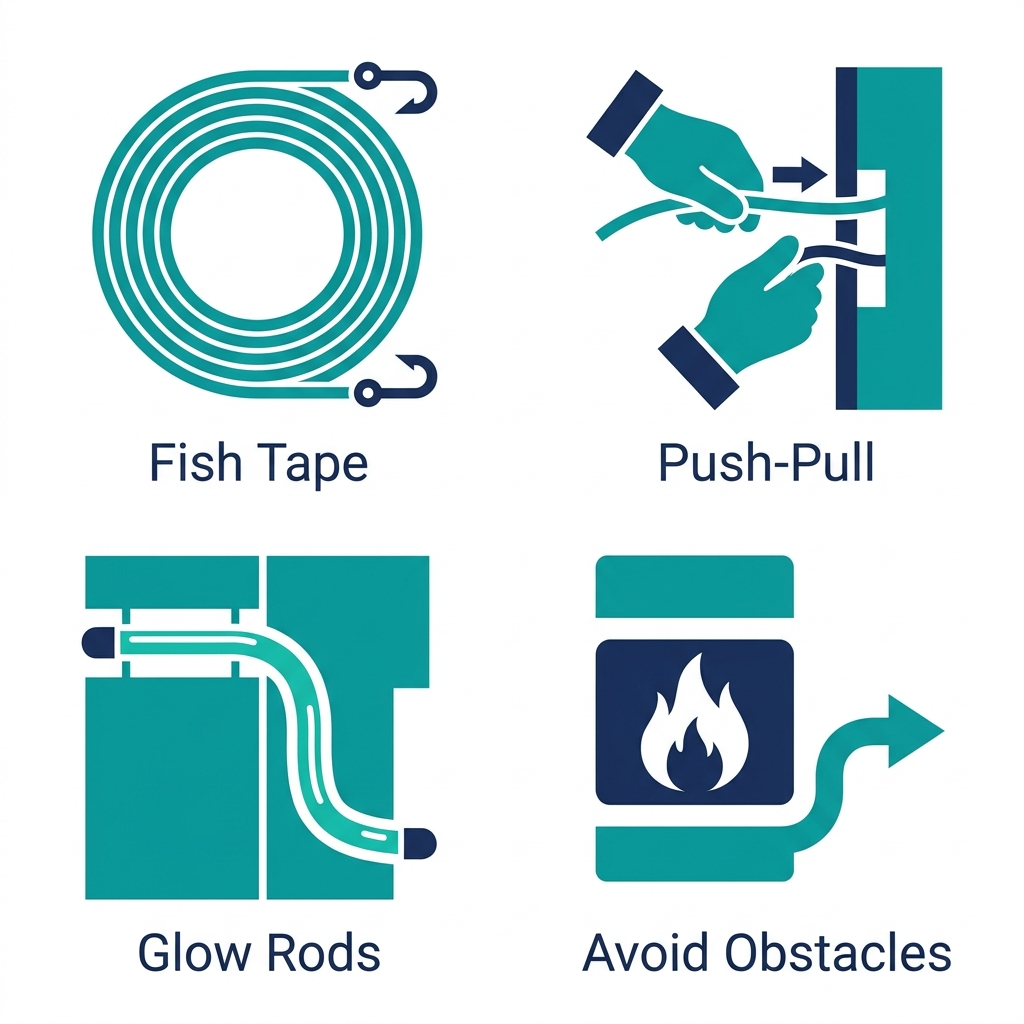
The insulation was done using a fish tape leader which will penetrate through the insulation. Fire Blocks will often call for access holes being drilled into place, while existing wire must be kept separate. This is done after the breaker is turned off and all circuits are verified de-energized. The wires have been fished through the cavity and now attention shifts toward making any necessary access holes for connecting the parts of the fire block and installing various devices in the hole.
Work Through Small Access Holes
NEC Section 334.30(B)(1) explicitly allows nonmetallic-sheathed cable to run without stapling when fished through finished walls where support is impracticable. When physical staples can’t be used, electricians employ alternative securement methods such as cable ties with mounting holes or expanding foam to hold the cable in place without removing large sections of drywall.
Some professional electricians note that some inspectors have interpreted the rule strictly and demanded drywall removal for stapling; however, public input has been submitted to clarify the code for the 2026 cycle. We use small, strategic access holes, cut behind baseboards, near outlet boxes, or inside closets, to fish cables with minimal drywall damage.
Safety is our #1 priority, and our licensed electricians follow NEC requirements, ensuring every cable is properly supported where accessible and that repairs are kept to a minimum. For longer vertical cable runs, we often shift the work to attic or basement pathways, further reducing the need for wall penetrations.
Leverage Attic and Basement Access
Basements and attics make electrical wiring easier because they enable electricians to get new circuits behind walls and ceiling panels without removing them in upper-floor rooms. By accessing the attic’s top plates, new cables can be dropped down into wall cavities—eliminating the need to remove drywall from upper-floor rooms. Similarly, basements and crawlspace expose floor joists, permitting wires to come up from below the wall. That’s good for first-floor jobs. This approach reduces drywall damage significantly because electricians can use existing chases or conduit wherever possible, protecting the wires while simplifying the pull. In older homes, however, firestops or blocking may require drilling through framing members, a task that demands precise, code-compliant work best handled by a professional electrician.
We need to understand them, but actually running fish wires through studs and around other things that would block wires is skilled labor. We have licensed electricians with the training to map out the cleanest path and complete the rewiring efficiently, so you can avoid unnecessary drywall repairs.
Hire a Professional for the Job
The key to rewiring a home without tearing out walls lies in hiring a trained professional. At High Voltage Electrical, our licensed electricians use methods that preserve plaster, woodwork, and original features. Non-destructive rewiring can avoid extensive drywall removal, keeping your home intact during the upgrade.
Our rewiring process follows a structured five-step sequence: a thorough assessment, permit filing, safe removal of legacy wiring, installation of modern compliant wiring, and a final inspection with a walkthrough. Our team uses specialized tools and techniques to access wiring through small openings, avoiding major demolition. Every project is backed by a 100% satisfaction guarantee, and our rapid 60–90 minute response time means you never wait long for help. Fully trained technicians handle the entire job, from planning to completion, ensuring code compliance and safety at every stage.
An experienced electrician plans each room’s needs in a systematic sequence: he first runs circuits through attics and crawlspaces and later makes the final connections, all while minimizing wall cuts.
Rewire Your House Room by Room
Is it possible to wire a house room by room? It sure can. However, a professional electrician should handle this task because you need to apply the right methods here. Working on only some part of your house allows other areas to keep getting electricity throughout the entire process, so it doesn’t slow down regular operations too much. This approach is particularly practical in older homes with knob-and-tube wiring, where a whole-home replacement is often the safest long-term solution. By working room by room, we help preserve original plaster, trim, and architectural details that full-scale demolition would destroy.
Step one involves a full inspection of the current wiring in the house. Next we secure any required permits and begin removing all old wiring. Once this is done, we install new wiring in compliance with the local electrical codes for the area. This phase will include another inspection prior to our walk-through with you as the homeowner. We execute the work one room at a time to keep the project organized and contained. Realizing these preservation benefits, however, hinges on one critical factor: strategic route planning that avoids unnecessary drywall cuts while still giving every room the safe, updated electrical system it requires.
Plan Routes to Avoid the Drywall
The main goal is to map out exact paths for each cable going in without having to remove any drywall when doing a whole-house wiring job. Our licensed electricians look at where they can access cavities inside walls and fish new non-metallic sheathed cables through existing stud bays using flexible drill bits and glow rods, preserving plaster and paint.
Other methods commonly used include unfinished basements, open attic spaces, and the narrow chase behind baseboards to span rooms with little to no drywall penetration. Avoiding drywall removal often hinges on these hidden channels, which allow conductors to travel horizontally while staying within NEC fill limits.
The homes that had legacy knob-and-tube circuits needed to have their old ungrounded wiring pulled out for safety reasons according to High Voltage Electrical’s internal documents. The contact between the old ungrounded wiring and modern insulation was a documented fire risk. Insurers were demanding certified replacement work done on these old circuits before they would renew homeowner insurance policies. In this final pulling phase, the electricians could only work around the old fixtures and old insulation in the home.
Existing fixtures and insulation present common obstacles when rewiring without removing drywall. Electricians at the company will reroute wires around existing junction boxes, ceiling fans, light fixtures and outlets. Our licensed electricians use specialized tools to navigate wires around these fixed points without cutting drywall.
If you’re using fiberglass batt insulation, then a fish tape might be able to get pushed between your stud spaces to do that job. But if you want blown in cellulose then you’ll need to take out a drill bit extension to make sure you have enough space for it to flow through. Do NOT crush down on any insulation though because it will decrease the thermal efficiency. Plus it’s going to give you more risk of fire around any wires if you are doing anything like that. So make sure to always turn off the power at the circuit breaker and test wires before working near fixtures. Your local city may require certain types of electrical permits in order to ensure that everything gets inspected once completed too.
When things get complicated or the wiring looks suspect, a professional assessment ensures safe, code-compliant results. If they can deal with each issue in turn, you needn’t remove loads of stuff.
Yes, You Can Rewire Without Tearing Down Drywall
While there may be issues related to upgrading your fixtures or fixing insulation in old houses, many people ask if they need to take out their walls in order to wire up a whole house. The simple answer is: No. Whole-house wiring can be accomplished without tearing down drywall, using non-destructive techniques that preserve plaster, trim, and original woodwork. Non-destructive methods can be used which will save plastering, trim work, and old wooden work on the wall. Non destructive techniques are also important when you have old plastering work or wooden work which adds value as historical charm to the old property.
First off we assess your home’s existing circuitry. Then we file for permits. Next up is the safe removal of old wiring – often knob-and-tube in homes prior to 1950. This is followed by installation of new, updated, code-compliant circuits. Finally, a final inspection and customer walkthrough confirm everything meets safety standards, while leaving your walls intact.
We offer this service in California and Texas, done by licensed and bonded electricians who would take care that we will preserve your home. This technique of rewiring without having to destroy things can save you a lot of time, and money on drywall repairs as well. It also won’t require turning your house into a construction zone when done with the right expertise.
Frequently Asked Questions
Will I need to patch and paint my walls after a non-invasive electrical rewiring?
Yes, you may need to patch and paint small access holes after a non-invasive rewiring. High Voltage Electrical electricians cut strategic openings behind baseboards or inside closets to fish wires, leaving most drywall intact. These minor holes are necessary for routing cables and require touch-up, but large-scale drywall removal is avoided.
Is it possible to rewire a house without removing all the drywall?
Yes, it is possible to rewire a house without removing all drywall. Professional electricians use fishing methods and small access holes to run new wires through wall cavities, preserving plaster and original features. The National Electrical Code allows fished cables to remain unsupported where stapling is impracticable.
What methods do electricians use to rewire a home with minimal wall damage?
Electricians use fish tapes, glow rods, and small strategic access holes cut behind baseboards or in closets to run wires without removing drywall. They also leverage attic and basement pathways to drop or pull cables into wall cavities, minimizing wall penetrations. Techniques like using existing chases and flexible drill bits help avoid damage.
How does access to attics and basements affect the difficulty of rewiring without removing drywall?
Attic and basement access significantly reduces the difficulty of rewiring without removing drywall. Electricians can drop new cables down from attic top plates or pull them up from basement floor joists directly into wall cavities, avoiding upper-floor drywall removal. This approach uses hidden pathways and minimizes wall penetrations.
Why is it recommended to hire a professional for rewiring projects that require minimal drywall disruption?
Professionals have the training to map clean paths through stud cavities, use specialized fish tools, and navigate obstacles like fire blocks without unnecessary drywall cuts. High Voltage Electrical’s licensed electricians ensure code compliance and safety, preserving your home’s original features during the upgrade. Their structured process includes inspection, permit filing, and final walkthrough.
Conclusion
Modern electric rewiring techniques allow homeowners to update outdated or unsafe wiring without the extensive drywall removal many assume is necessary. High Voltage Electrical does these kinds of minimally-invasive re-wiring jobs for them.
All work meets or exceeds electrical codes and industry standards, with licensed electricians handling every project. We maintain full insurance and bonding for your protection, and emergency services are available 24/7. Our Privacy Policy safeguards your information. However, results may vary based on individual home conditions, and the 60–90-minute arrival guarantee depends on your location and current demand.
To receive a free estimate and find out if you can rewire your house without removing drywall, call us today at (855) 501-7800 or visit our website and take the first step toward a safer, more reliable electrical system.
Start Your Rewiring Project
Now that you understand how electricians can rewire your home without tearing out drywall, using techniques like fish tape, small access holes, and attic or basement pathways, it’s time to take the next step. Our company has been providing non-destructive rewiring services for over two decades. Our licensed and bonded electricians follow a careful five-step process that preserves your walls while delivering code-compliant upgrades. We offer transparent upfront pricing and a 60–90 minute response time on all inquiries. Call (855) 501-7800 or arrange a consultation to start your rewiring project, and enjoy a safer, modern electrical system without the mess of a gut renovation.