Table of Contents
- Why Your Breaker Size Matters More Than You Think
- Can I Put a Bigger Breaker in My Box?
- The Real Danger of Swapping a 15-Amp Breaker for a 20-Amp Unit
- How Wire Gauge, Circuit Load, and Panel Capacity Set Your Breaker Limit
- Fire and Shock Hazards of Oversized Circuit Breakers
- The Right Way to Deal with a Breaker That Keeps Tripping
- Keeping Your Electrical Panel Safe for the Long Run
Why Your Breaker Size Matters More Than You Think
Many homeowners ask, can I put a bigger breaker in my box? A circuit breaker’s job is to trip when current exceeds safe levels, protecting the wiring inside your walls from overheating and potential fire hazards. When a breaker is too large for the circuit it serves, it may fail to trip in time, allowing dangerous heat to build up undetected. That’s why matching the breaker size to the circuit’s wiring and load isn’t just a technical detail—it’s a critical safety decision. It may seem like a quick fix, but choosing the wrong size can create risks that aren’t immediately obvious, so the right choice depends on more than just convenience.
Key Takeaways
- Home owners frequently inquire if it is possible to use a larger breaker in its place.
- Physically installing a larger breaker may seem like a quick fix, but it introduces serious safety risks that far outweigh any perceived convenience.
- How large a breaker you actually may insert isn’t just a choice, it depends on three limits that all interact to make sure your house stays safe.
- When breakers keep tripping, it is not only annoying but also a sign from our electrical system to stop what we’re doing and be methodical instead of just fixing whatever trips the circuit.
- If you’ve wondered can I put a bigger breaker in my box, the safe answer starts with the panel label.
Can I Put a Bigger Breaker in My Box?
Home owners frequently inquire if it is possible to use a larger breaker in its place. The answer is that this cannot be done simply. Replacing a smaller breaker with a larger one will not increase the actual amount of electrical power that you can safely run through your electrical panel. The main breaker acts as the limit on how much electricity the entire house uses at any time. Therefore increasing a single branch breaker’s capacity does not modify this limit.
If there is an interior label on the panel from the manufacturer, that should be checked first. If it does contain information about what type and size breakers go into certain slots then this information needs to be followed. Ignoring this could result in improper connection between the two elements, resulting in overheated connections and eventually a fire. Even though a particular slot appears vacant, the bus bar may simply not allow a larger breaker than is currently installed without a safety risk. That is another reason why we always suggest contacting an electrician when looking at modifying your circuitry.
The three main elements that determine the maximum branch breaker size your panel can hold are:
- Manufacturer specifications: Each panel is engineered for specific breaker types and amperage limits.
- Total connected load: A licensed electrician must perform a load calculation to ensure the panel isn’t already near its 200-amp limit.
- Physical configuration: Tandem breakers, slim-line options, and available bus bar space all influence what can be installed safely.
If you install breakers that aren’t rated for the circuit, or exceed a slot’s rating, you create a fire risk and violate electrical codes. When adding a higher-power circuit, like an EV charger, a load study is needed to ensure the panel can handle the extra demand from other devices. Our crew will perform those tests to ensure that your new upgrades meet local building codes and safety requirements.
The Real Danger of Swapping a 15-Amp Breaker for a 20-Amp Unit
Physically installing a larger breaker may seem like a quick fix, but it introduces serious safety risks that far outweigh any perceived convenience. Safety is our #1 priority, and oversizing a breaker undermines the very protection designed to keep your home safe from electrical fires.
If you’re swapping out a 15-amp breaker with a 20-amp breaker, that increase in breaker’s amperage rating allows more current than what the downstream wiring is engineered to handle. Because your internal wiring inside walls is designed for less electricity than a 20-amp breaker will allow, those wires can overheat before the new breaker ever trips, creating a hidden fire hazard behind drywall and insulation. That mismatch between breaker capacity and conductor capacity turns a protective device into a liability, because the breaker no longer responds at the current level the wiring can safely carry. On top of all this, the panel manufacturer’s interior label specifies the exact breaker types and amperage ratings allowed for every position in your electrical box, reflecting the engineered safety margins built into your home’s electrical system.
Beyond the thermal risk, an oversized breaker can also cause poor electrical contact within the panel itself. Installing an incompatible breaker or exceeding a slot’s rated capacity creates resistance points that generate excessive heat and increase the likelihood of arcing. According to electricians, these conditions significantly elevate fire risks and violate the fundamental purpose of circuit protection.
There is only one source of truth as far as what type of breaker goes where in which slot – that being the panel maker’s interior label. The label will have specific information about all positions in your electrical box such as the breaker type and the amp rating required. If you ignore this, even if there happens to be more amperage than the recommended amount available, you’re compromising the safety measures that were intended with the system.
Proper breaker sizing isn’t about improving circuit performance; it’s about maintaining the precise balance between load demand and conductor protection. When that balance is disrupted, the result isn’t just a tripped breaker—it’s a preventable hazard that endangers your property and your family.
How Wire Gauge, Circuit Load, and Panel Capacity Set Your Breaker Limit
How large a breaker you actually may insert isn’t just a choice, it depends on three limits that all interact to make sure your house stays safe. The biggest breaker in a 200 amp panel sets what amount of current you will be able to take from your home during any one instant, so any breakers that get connected into the panel cannot exceed that ceiling quantity. Another important limit is the panel itself: the label on the inside of your breaker box spells out exactly which types of breakers and amperage ratings each slot accepts. Not following this could lead to problems like electrical contacts and even fires.
Wire gauge is the first practical constraint. A conductor can only carry so much current safely, and the breaker must match what the wire can handle; otherwise, the wire overheats even if the breaker doesn’t trip. That’s why we always recommend checking the conductor’s markings and the panel label before upsizing a breaker—it’s not about preference, it’s about matching the wire’s capacity to the breaker’s rating.
The next limiting factor is the total connected load for the panel itself. Before we install any higher demand equipment such as EV chargers, a professional load study confirms the new draw won’t push the system past its 200-amp safety margin. Without doing that analysis, even if the breaker was the right size, the panel could be overloaded and made dangerous.
The configuration of its electrical components has fixed boundaries as well. Some panels have slots that will accept a pair of half-sized breaker tandems while others will only take full size breakers; the amount of busbar and slot ampacity varies based on design, too. So always refer to your panel manufacturer’s internal label, this document contains all the information necessary to know exactly what kinds of equipment can be added to your particular panel without hammering a nail into anything.
Start by locating that label inside your panel door. It’s the authoritative reference for what your system can safely handle, and it’s the only place to confirm whether a larger breaker is even an option.
Fire and Shock Hazards of Oversized Circuit Breakers
Many homeowners ask whether they can put a bigger breaker in their box to stop nuisance tripping, but doing so ignores a critical safety rule: the panel’s interior label dictates the maximum breaker size for each slot. Ignoring those limits doesn’t just violate code — it creates real hazards that can put your home and family at risk.
A larger breaker than needed can cause overheating in the wiring located behind the breaker. This occurs when the wiring size does not match the rating on the breaker. The excessive current passing through the wiring causes heat to build up which degrades the insulation. When this happens the wires may begin to arcing, shorting out, or catch on fire. Another issue arises if there is poor contact made at the bus-bar by the large breaker. This will generate heat locally, greatly increasing the possibility of combustion. These problems do not just happen right away. They slowly develop over time and can be hidden by the tripping of small breakers that homeowners attempt to solve by upsizing their breaker.
Shock hazards rise alongside fire risks when oversized breakers loosen or overheat. Melted insulation can expose live conductors behind the panel’s dead front cover, creating a path for electrocution if touched during maintenance or an emergency. If anyone touches them at that time, they could receive serious shocks. Additionally, loose or hot connections create resistance in the circuit causing voltage drops that may damage equipment. Neither condition is obvious until something fails, so preventing it requires appropriate breaker sizing and professional inspection.
Instead of upsizing a breaker, we recommend treating repeated tripping as a warning sign. A breaker that trips often signals an underlying issue — an overloaded circuit, a wiring fault, or an undersized conductor — that requires diagnosis, not a quick fix. Our fully trained technicians can perform load calculations and inspect your panel to identify the root cause safely and accurately. Electrical systems demand precision; cutting corners compromises safety for everyone in the home.
The Right Way to Deal with a Breaker That Keeps Tripping
When breakers keep tripping, it is not only annoying but also a sign from our electrical system to stop what we’re doing and be methodical instead of just fixing whatever trips the circuit. We would encourage you to treat repeated tripping as a signal to pause and act methodically rather than reaching for a quick fix like upsizing the breaker.
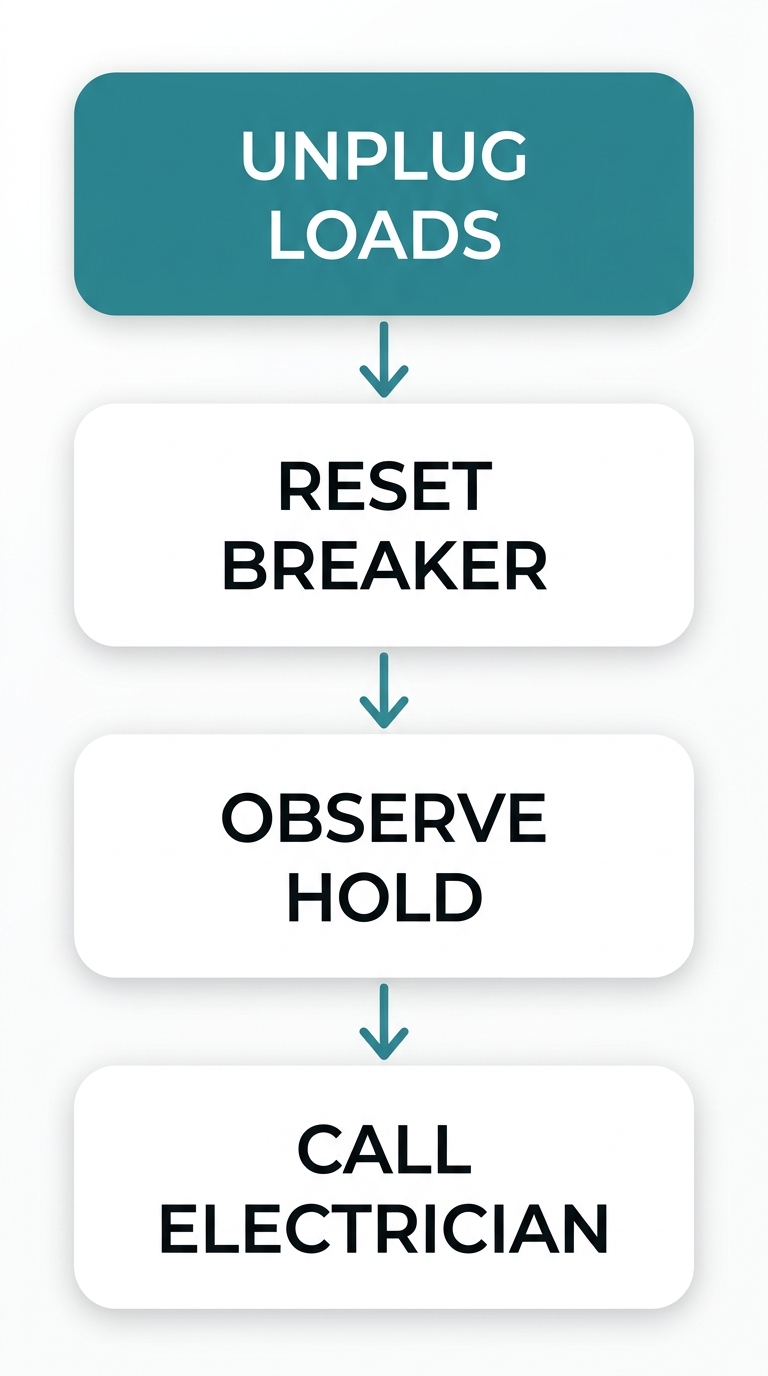
Next, determine which circuit breaker has flipped or tripped and turn off or unplug all items on that specific circuit in order to cut back the number of things using energy at any given time. After you have turned these down or off, push the breaker just as far over toward ON as it will go and then wait and see if it stays up and remains in position. If the breaker pops once more shortly following your effort, don’t attempt to reset it repeatedly. Instead, leave the breaker out and turn off. Following this method prevents your system from wearing out too quickly and reduces the potential for fire or overheating.
Many homeowners wonder can I put a bigger breaker in my box to stop the tripping. The answer is no—not without professional guidance. The main breaker in your panel acts as the total 200-amp safety ceiling for your entire home’s electrical system. Swapping in a larger branch breaker may seem like a solution, but it only shifts the risk upstream to the main breaker, which is designed to protect the whole system from overload. Every breaker slot’s allowable amperage is dictated by the panel manufacturer’s interior label, and using an oversized breaker can create poor electrical contact and increase fire hazards.
If your breaker keeps tripping when there isn’t any load on the line, and even if you have reset it at least once, you should consult a professional electrician. An experienced electrician will determine whether the problem is that you have too many items plugged into one circuit, faulty wiring, or that the breaker is too small. If this happens, we fix it daily to make sure all of your systems stay safe and up to standards and don’t suffer any permanent damage.
Getting the proper things done can shield your house’s power integrity and keep you protected over time.
Frequently Asked Questions
Can I put a bigger breaker in my box to stop it from tripping?
No. Installing a larger breaker does not address the root cause of tripping and creates fire hazards. The breaker’s job is to protect the wiring from overheating, and an oversized breaker may allow dangerous heat to build up before tripping. The panel manufacturer’s interior label specifies the exact breaker types and amperage allowed for each slot.
Is it safe to replace a 15-amp breaker with a 20-amp breaker?
No. A 20-amp breaker allows more current than the wiring downstream is designed to handle, risking overheating and fire. The panel label dictates the correct breaker size for each slot, and ignoring it creates poor electrical contact and potential arcing.
Does a larger circuit breaker mean I can draw more power safely?
No. The main breaker sets the 200-amp ceiling for your entire home’s electrical system. A larger branch breaker does not increase this limit or the safe power your home can use at once.
What are the fire risks of installing an oversized circuit breaker?
Oversized breakers can cause wiring behind the panel to overheat because the wire gauge is not matched to the breaker rating. Poor electrical contact at the bus bar can also generate heat and increase fire risks. These hazards develop over time and may not be immediately visible.
How do I know if my home’s wiring can support a larger circuit breaker?
The panel manufacturer’s interior label shows the allowable breaker types and amperage for each slot. A licensed electrician must also perform a load study to confirm the panel can safely handle additional demand without exceeding its 200-amp limit.
Keeping Your Electrical Panel Safe for the Long Run
If you’ve wondered can I put a bigger breaker in my box, the safe answer starts with the panel label. The main breaker sets the 200-amp ceiling for your entire system, so long-term safety means respecting that limit above all else. Always check the manufacturer’s interior label before adding or swapping breakers—it dictates allowable types and amperage per slot to prevent poor contact and fire hazards.
Before adding high-demand circuits like an EV charger, a formal load study ensures your panel can handle the extra demand without overloading. Our licensed electricians perform these evaluations and handle all work to code, so you can trust your system stays protected for years to come. Results may vary based on individual circumstances and building conditions, and insurance and bonding are maintained for all services. Emergency services are available 24/7 for any urgent needs.
Get Expert Help with Your Panel
breaker size is limited by wire gauge, circuit load, and your panel’s capacity — not by preference. The manufacturer’s interior label is your first check, but interpreting it correctly takes experience. If a breaker keeps tripping or your panel feels warm, that’s a signal worth investigating rather than working around. High Voltage Electrical’s licensed electricians handle panel upgrades, circuit breaker replacements, and safety inspections across Southern California. Every evaluation starts with an in-person diagnostic, so recommendations reflect your home’s actual electrical load. Whether you’re planning an EV charger or troubleshooting repeated trips, a professional assessment keeps your wiring protected. Reach out today for a free estimate and let a trained expert verify what your panel can safely handle.