Table of Contents
- Electrical Panel Replacement: What Homeowners Need to Know
- Can I Replace My Main Electrical Panel Myself?
- The Hidden Dangers of DIY Panel Replacement
- Permit Requirements Across California and Texas
- How Unpermitted Work Can Void Your Insurance
- The Value of Hiring a Licensed Professional for Panel Upgrades
- Ensuring Safe and Code-Compliant Electrical Upgrades
Electrical Panel Replacement: What Homeowners Need to Know
While it’s usually up to the owner whether he can replace his electrical panel, if he lives in a single-family house then some areas allow owners to handle this type of project themselves. However, the risks associated with replacing an electrical panel are life threatening. You’ll also need the required permits, and the panel must undergo inspection before installation. Flipping the main breaker does not de-energize the service entrance conductors, those wires remain energized with 240 volts until the utility company disconnects service, according to LegalClarity, an authoritative source on electrical safety and code requirements. Homeowners who skip permitting can face denied insurance claims if a fire later traces back to unpermitted work. Professional panel replacement typically costs between $1,500 and $4,500 and includes compliance with current National Electrical Code mandates such as surge protective devices and arc-fault protection. There’s more than just money involved here because there are numerous concerns homeowners should think twice about before making this decision. This article examines those issues.
Key Takeaways
- Even where local regulations permit homeowners to perform their own electrical panel replacement, significant risks remain that go far beyond simple technical difficulty.
- Getting the appropriate permits is vital for any electrical panel upgrade; however, the requirements differ notably between California and Texas.
- Electrical permits aren’t just a legal formality, they are a critical safeguard for your home insurance coverage.
- Beyond increasing capacity, a professional panel replacement also ensures that you have a safe, up-to-code setup.
- The first step in a safe upgrade is choosing a licensed electrician.
Can I Replace My Main Electrical Panel Myself?
While homeowners may be allowed to replace their main electrical panels on their properties that they own and occupy depending on where they reside, this project still needs permits, inspections as well as the need to deal with the safety concerns for everyone involved.
Homestead exemption In Texas as well as other States enables homeowners to undertake electrical work at their single family main home, but it does not eliminate the necessity for permits and final inspection. Building divisions will look over load calculations and circuit directories, and inspectors check for compliance with the National Electrical Code. Not obtaining permits or bypassing inspections may bring about big fines. Unapproved work normally fails to pass as soon as you try to shut out the venture lawfully.
Even experienced DIYers face hazards that cannot be eliminated by caution alone: service entrance conductors remain energized at 240 volts even after the main breaker is switched off. An arc at residential service voltages can exceed 35,000°F, creating severe shock and burn risks. Only the utility provider can de-energize those conductors, and coordinating that shutoff is essential for safe work.
Unpermitted panel replacement can also create lasting financial exposure. Insurance carriers may deny fire claims if investigations link damage to unpermitted modifications, and missing permit history can stall or complicate home sales. Texas-specific guidance highlights that non-compliant work can generate legal liability for sellers.
A panel replacement triggers current code requirements regardless of a home’s age. The 2023 NEC—adopted in many jurisdictions, including Texas—commonly requires whole-home surge protective devices (SPDs), exterior emergency disconnects, and expanded AFCI protection in living areas. Hardware costs for a full home SPD range from around $50-$150, with AFCI circuit breakers typically between $30-$50 each.
Professional replacement by a licensed electrician typically costs $1,500–$4,500, which covers permit handling, utility coordination, and verified compliance. We offer electric panel upgrades with a 100% satisfaction guarantee and same-day service on many projects, so homeowners avoid both physical dangers and regulatory headaches. When you weigh the costs and risks, the question becomes whether you can upgrade your own electrical panel safely enough to protect your family and your investment.
There’s more than just a legal risk in performing your own work on your home’s electric panels. The danger of working with live electrical power should also be considered.
The Hidden Dangers of DIY Panel Replacement
Even where local regulations permit homeowners to perform their own electrical panel replacement, significant risks remain that go far beyond simple technical difficulty. According to LegalClarity, merely flicking the main circuit breaker on the new replacement panel doesn’t disable any voltage that remains in the wires feeding your house’s service entrance. This means electricity will continue flowing through the service entrance wires, carrying power from the utility lines, until the power company physically disconnects the service. That is why the potential for arc flash at these residential voltages can exceed 35,000 degrees Fahrenheit, creating a catastrophic hazard for anyone working near the connections.
An educational legal guide published by that legal guide confirms that an insurance provider may deny a fire damage claim entirely when it discovers that unpermitted electrical modifications caused the loss, leaving the homeowner fully financially responsible for repairs. As mandated by the National Electrical Code, electrical installations are required to include modern safety features such as surge protective devices, exterior emergency disconnects, and arc-fault circuit interrupter protection on many circuits. DIY installations frequently overlook or omit those upgrades.
Federal Pacific electrical panels are widely identified in the electrical industry as hazardous installations that may fail to trip during fault conditions, creating an ongoing risk of fire and electrocution within the home. According to a consumer safety report by The Cool Down, the manufacturer of these specific panels allegedly falsified safety test results over a period of years, allowing thousands of defective breaker units to be distributed and installed before the issue came to light. Insurance companies have been known to deny coverage outright for properties found to contain these unreliable panels, and experts universally recommend that only licensed professional electricians should handle the removal and replacement of such dangerous legacy equipment.
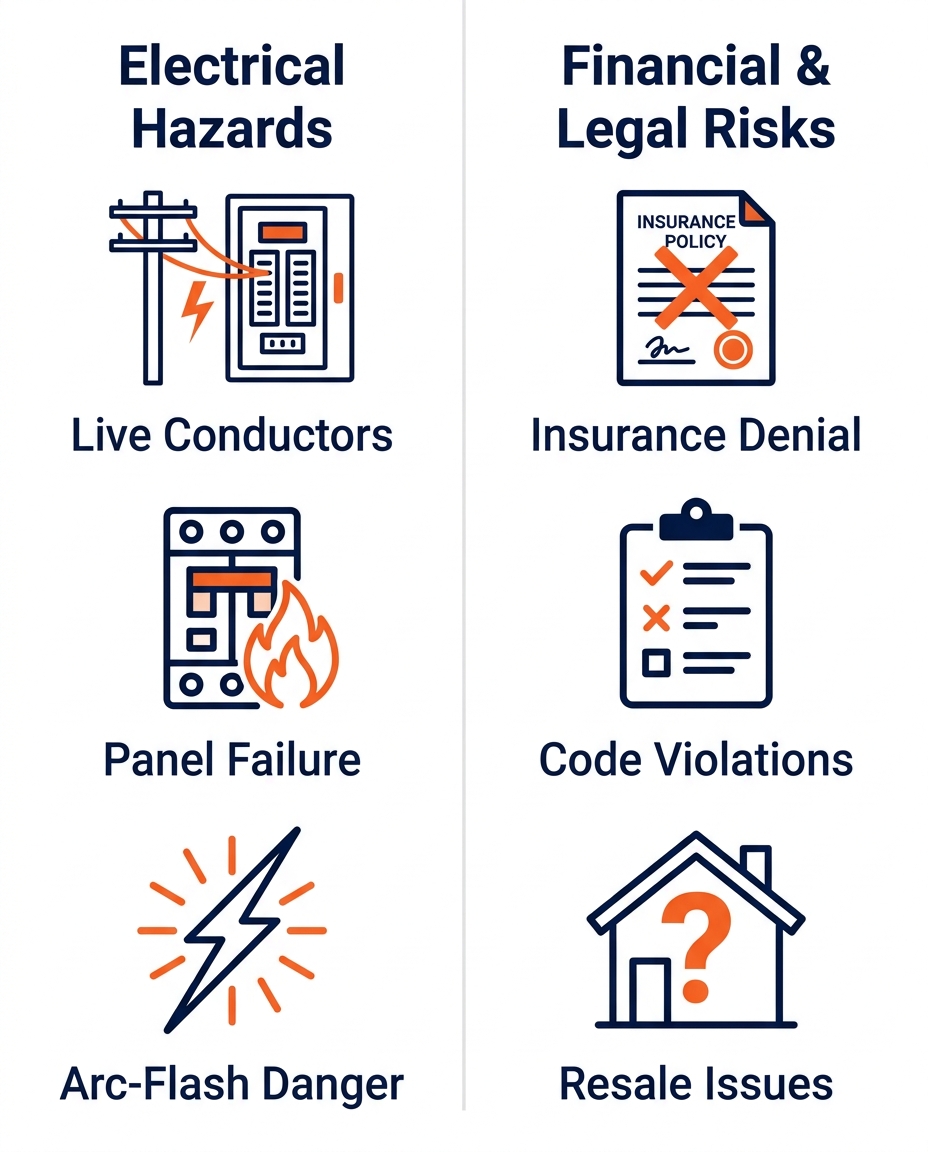
While minimizing the simultaneous use of high-draw appliances such as space heaters, air conditioners, or kitchen equipment can reduce immediate stress on a compromised panel during the wait for a professional inspection, this strategy is only a temporary risk mitigation measure, not a permanent solution. Safety is our #1 priority at High Voltage Electrical, and our licensed electricians ensure code-compliant work. These serious electrical and financial risks underscore why proper permitting and professional handling remain essential.
Permit Requirements Across California and Texas
Getting the appropriate permits is vital for any electrical panel upgrade; however, the requirements differ notably between California and Texas. In both states, licensed electricians such as our company at High Voltage Electrical will be responsible for filing all the permits needed with local building departments and utility companies, ensuring everything follows code. This includes the load calculations, completing the paperwork that needs to be sent to the city as part of the permit, getting the right inspections performed on the job, and ensuring the new panel satisfies NEC standards. This can help to maintain all the updated safety codes enforced by the permit, such as having AFCI and GFCI protection included when making modifications to existing service.
Homestead Exemption in Texas has a different twist. According to that legal guide, which is an industry legal resource, homeowners can perform electrical work on your own main residence, however you still need to get all proper building permits and pass inspection. For example if you are just changing out the main panel, then your work needs to be done up to current 2023 NEC in your State. Only master electricians can pull permits in Texas, and a journeyman electrician must always work under the supervision of a master electrician when filing for permits, with residential wiremen subject to similar limitations. In California, specific permit requirements vary by local jurisdiction, but the principle is the same: licensed professionals navigate the regulatory landscape so that every upgrade meets all applicable codes. So each city will determine what type of permits will be needed, but Licensed professional’s make sure that anything upgraded meets all code.
Permitting and inspections enforce the GFCI and AFCI requirements of NEC whenever a service change occurs. As we update panel equipment, our electricians ensure that circuits serving kitchens, bathrooms, laundry areas, and living spaces incorporate these life-safety devices. Failing to secure the necessary permits carries tangible risks: unpermitted electrical work can lead to insurance claim denials in the event of an electrical fire and must be disclosed during real estate transactions, potentially complicating or derailing a sale. Not having a permit could also cause problems if someone wants to sell the house. Without permits it would have to be revealed as part of the transaction. The permit and inspection process directly enforces the GFCI and AFCI protections that the NEC requires for service changes. Permits are not just bureaucratic steps—they are directly tied to your insurance protection and liability.
How Unpermitted Work Can Void Your Insurance
Electrical permits aren’t just a legal formality, they are a critical safeguard for your home insurance coverage. If electrical work is done without a proper permit and inspection, you may be putting your financial protection at risk.
Insurers typically require documentation that all electrical improvements in the house comply with local codes. If a fire occurs and the investigation traces the cause to unpermitted work, the insurer may deny the claim on the grounds that the hazard was created by the homeowner’s failure to follow legal requirements. A lack of the required permit means there might be safety problems as well as no proof in insurance firms’ records that the electrical systems in your house were installed according to the code, said the guide.
The situation becomes even more critical with certain outdated panels. However there’s something you should know about Federal Pacific electrical panels. They have a documented history of breakers that may not trip during an electrical fault, significantly increasing fire risk. The Cool Down reports that insurance providers may deny claims or even refuse to issue a policy for a home that still has a Federal Pacific panel in place. For these reasons, experts strongly recommend hiring a licensed electrician to replace these panels — a task far too hazardous for a DIY approach.
While professional panel replacement costs typically range from $1,500 to $4,500, as indicated by the permit guide, that expense is far outweighed by the potential financial devastation of a denied insurance claim following a house fire. Choosing a licensed professional ensures that every permit is secured and every inspection is passed, maintaining the insurance coverage your family depends on. At High Voltage Electrical, our fully trained technicians manage every step of the panel upgrade — from pulling the permit to final approval — so you never have to worry about gaps in your protection. This comprehensive approach not only meets all code requirements but also safeguards the long-term insurability of your home.
The Value of Hiring a Licensed Professional for Panel Upgrades
Beyond increasing capacity, a professional panel replacement also ensures that you have a safe, up-to-code setup. That being said, there are too many issues and hazards that come along with replacing a panel at home, so make sure to hire someone with proper training.
We also determine if your current wiring will hold up under a new 200-amp service. In many cases, we can do this without a full rewiring, which means you don’t need to spend thousands of dollars to have everything torn out and replaced. The load calculation that goes into sizing your breaker panel takes into account things like electric vehicle chargers and more powerful air conditioning units, ensuring your system is installed properly according to NEC Article 220.
If you still have a legacy panel installed that is made by Federal Pacific or Zinsco, a licensed professional will identify the hazard and recommend immediate replacement. These panels are known to fail to trip during overloads, posing a serious fire risk.
Unpermitted electrical work gives insurers the power to deny any claims on fire damage. When we do your update we will file permit requests, coordinate with the utility to disconnect the service entrance conductor, then make sure the job is done correctly and passes inspections. For these reasons, many homeowners in California and Texas trust our company as licensed local electricians you can trust for panel upgrades that keep them safe and out of danger. All of our electricians are fully bonded, and they also follow electrical codes religiously. This means you won’t have to worry about getting blindsided in case something goes wrong with the panel.
In today’s home, if there are new panels, you’ll have to add SPDs (Surge Protective Devices) and AFCIs (Arc Fault Circuit Interrupters) for living spaces. A licensed electrician integrates these devices correctly, protecting your gadgets and reducing fire risk—tasks that demand specialized training and equipment. This job requires specific training and equipment.
A professional panel replacement will run anywhere from $1,500 – $4,500, but keep in mind this investment covers way more than just physical hardware. This also includes an on-site load evaluation, the safe and proper disposal of old components, securing the permits necessary and coordinating with the electric utility company, as well as integrating new devices like surge and arc-fault protection into your system. Plus, choosing professional installation helps you avoid the far greater cost of a failed inspection, a denied insurance claim, or a catastrophic electrical fire.
The licensed professional’s panel upgrade is the first step you need in order to have a safe house electrical wiring. Then, once you get this, you can start looking into all the various electrical codes that need to be met when getting new electric panels installed.
Frequently Asked Questions
Why is it dangerous to attempt a DIY electrical panel replacement?
Attempting a DIY electrical panel replacement is dangerous because flipping the main breaker does not de-energize the service entrance conductors; they remain live at 240 volts. This creates a severe electrocution and arc flash hazard, with residential arcs able to exceed 35,000°F. Only the utility company can make the panel safe to work on.
Do I need a permit to replace my home’s electrical panel?
Yes, you need a permit to replace your home’s electrical panel. Even in states with homeowner exemptions, such as Texas, permits and inspections are mandatory to verify compliance with the National Electrical Code. Failing to obtain them can result in fines and a failed inspection.
What are the risks of performing my own electrical panel installation?
Performing your own panel installation carries the risk of life-threatening shock or arc flash from live service conductors, insurance claim denial if a fire is traced to unpermitted work, and failure to meet current code mandates like surge protective devices and arc-fault circuit interrupter protection. Overlooking these upgrades creates long-term safety and financial exposure.
Will my insurance cover fire damage if I replace my electrical panel myself?
Your insurance may not cover fire damage if you replace the panel yourself without a permit. Insurers often deny claims when an investigation links the loss to unpermitted electrical modifications, leaving you fully responsible for repair costs. Proper permits and inspections are essential to maintain coverage.
Ensuring Safe and Code-Compliant Electrical Upgrades
The first step in a safe upgrade is choosing a licensed electrician. Upgrading electrical service doesn’t always require a full house rewiring. But you can’t know that without an on-site evaluation. The only way to find out is by having an electrician evaluate your property’s electrical systems at a particular site. Then we do the permitting for you, conduct exact load calculations according to current laws, and place AFCI & GFCI protections where they’re needed. Legacy panels from manufacturers such as Federal Pacific and Zinsco pose documented fire risks and must be replaced during any upgrade, a determination our experienced team makes as part of every assessment. Entrusting your project to our company gives you the confidence that comes from working with bonded, fully licensed professionals committed to safety and precision. Our arrival times and satisfaction guarantee reflect the reliability we deliver. We provide emergency service 24/7. Contact us for a professional assessment, and take the first step toward a safer, code-compliant electrical system for your home.
Schedule a Professional Assessment
You now understand the serious risks of attempting a DIY panel replacement, from live service conductors to insurance claim denials and code violations. Our licensed electricians handle every detail, including permits, utility coordination, and modern safety standards like AFCI and surge protection. With over 20 years of experience in California and Texas, we provide same-day service and a 100% satisfaction guarantee. Protect your home and your family’s safety by scheduling a professional panel evaluation today. Let our experts ensure your upgrade is code-compliant and worry-free.
Schedule a Professional Assessment
Resources
- Discover Legal Requirements for DIY Electrical Panel Replacement
- Learn the Dangers of Federal Pacific Electrical Panels
- Explore the Penalties for Unpermitted Electrical Panel Work
- Discover Texas Residential Electrical Code Requirements and Permits
- Discover New Jersey Requirements for Electrical Panel Permits