Table of Contents
- Understanding How Your Refrigerator Fits Into a 20 Amp Circuit
- What a 20 Amp Circuit Can Safely Handle
- Does the National Electrical Code Require a Dedicated Circuit for Your Refrigerator?
- Why Compressor Startup Loads Trip Shared Circuits
- How to Find Out if Your Refrigerator's Manufacturer Requires a Dedicated Circuit
- Safe Kitchen Circuit Arrangements and When to Call a Licensed Electrician
- Keeping Your Refrigerator Circuit Safe and Code-Compliant
Understanding How Your Refrigerator Fits Into a 20 Amp Circuit
Can you run a refrigerator and an outlet on a 20 amp circuit? Yes, the National Electrical Code (NEC) permits refrigerators on kitchen small-appliance branch circuits, so sharing a 20 amp circuit with outlets is generally code-compliant. While this setup meets minimum safety standards, dedicated circuits are recommended to prevent nuisance tripping when the compressor cycles alongside other appliance use. A shared circuit may work for standard refrigerators, but isolating the appliance protects sensitive electronics and avoids potential food spoilage from unexpected power loss. The NEC allows refrigerators to share circuits with countertop outlets, yet it also encourages dedicated circuits for refrigeration appliances to ensure consistent performance and reduce strain on the electrical system. By understanding load limits and circuit design, you can balance convenience with safety in your kitchen layout.
Key Takeaways
- If you’re wondering whether you can run a refrigerator and an outlet on a 20 amp circuit, the short answer is yes, but only if you do so within certain limits.
- can you run a refrigerator and an outlet on a 20 amp circuit?
- Can you run a refrigerator and an outlet on a 20-amp circuit?
- Most refrigerator installation manuals require a dedicated circuit, even though the NEC permits refrigerators on shared small-appliance circuits.
- Whether you can run a fridge and an outlet on a 20 amp circuit depends on code compliance and safety.
What a 20 Amp Circuit Can Safely Handle
If you’re wondering whether you can run a refrigerator and an outlet on a 20 amp circuit, the short answer is yes, but only if you do so within certain limits. A 20-amp home circuit can support up to 16 amps of continuous load, per NEC’s 80% rule, which leaves little room for additional high-demand appliances such as a refrigerator. The chance of nuisance tripping exists if you also use the circuit for outlets or other devices because your refrigerator’s compressor will turn on and draw a few times more power than normal when it starts.
For a 20 amp circuit, the wiring is designed to handle that much load: 12 AWG copper wire is needed, compared to 14 AWG minimum for 15 amps. This gauge provides the necessary ability to carry the designated current without overheating. When installing or updating outlets in your kitchen, garage or workshop, using the appropriate wire size will keep the wires from getting too hot and avoid fire dangers, while meeting current electrical codes that emphasize safety and reliability.
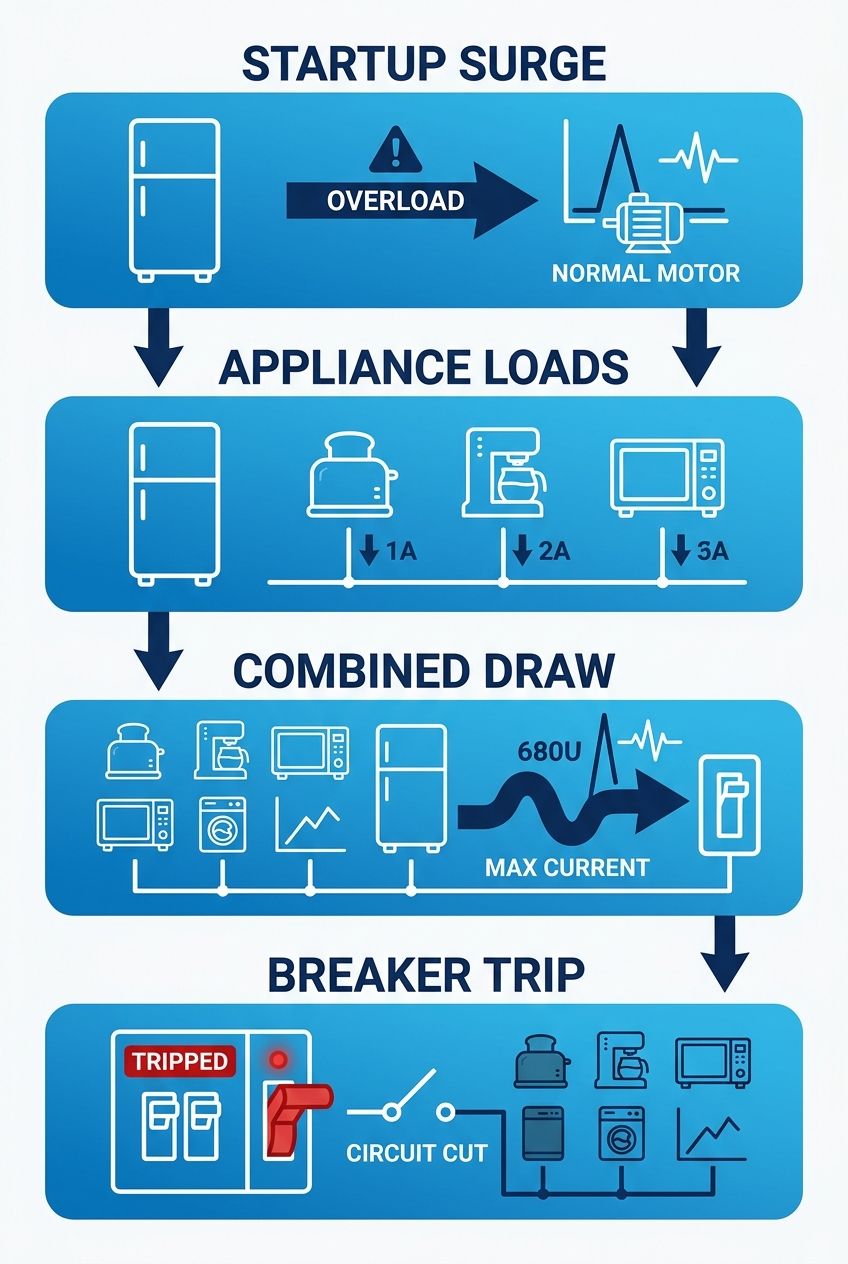
The compressors in refrigerator motors generate short but intense startup surges that can overload shared circuits. It’s possible that the average draw is under 16 amps, but the spike could blow the breaker if there are other heavy users such as microwaves and toasters on the same line. For this reason, many manufacturers recommend, and some codes require, a dedicated circuit for refrigerators in order to avoid spoiled food and protect delicate components from voltage drops and other surges.
To stay safe, never plug a refrigerator into an extension cord or power strip. NEC 400.12 forbids extension cords for permanent appliances because voltage drop and poor connections can damage the compressor motor over time. Install a dedicated 20-amp circuit and a correctly-rated receptacle in your kitchen or pantry instead. This is the recommended method and will ensure that your refrigerator works properly without tripping the breaker.
Does the National Electrical Code Require a Dedicated Circuit for Your Refrigerator?
can you run a refrigerator and an outlet on a 20 amp circuit? It’s not as simple as a straight up yes or no. The National Electrical Code (NEC) allows for a standard kitchen refrigerator to be placed on a 20-amp small-appliance branch circuit with countertop outlets according to Article 210.52(B)(1), but there are situations where a dedicated circuit would be required instead.
We see out in the field that even though the code permits this sort of shared arrangement, many manufacturers explicitly require a dedicated circuit in their installation manuals. NEC 110.3(B) states that these instructions are required to be followed, and what might otherwise be code-compliant can fall short because of manufacturer requirements. Then we come back to the 80% rule, where any cord-and-plug connected appliance that draws greater than 16A on a 20A circuit needs its own circuit. Most household refrigerators work fine under these circumstances, but the initial starting surge as well as use simultaneously with high wattage devices can push the total overboard. Electrical isolation helps eliminate nuisance trips from high wattage countertop devices like toasters and coffee makers on the same circuit.
Refrigerators located in areas other than a kitchen zone, such as in the garage, basement or utility room, cannot be connected to any small-appliance branch circuits and must have a circuit of their own. Even within a kitchen, modern code requires that all receptacles, including the ones servicing your refrigerator(s), have GFCI protection and many are being installed with dual-function AFCI/GFCI circuit breakers for added safety. Using extension cords or power strips for refrigerators also violates NEC 400.12 and could damage your sensitive compressor electronics from voltage drop. While the NEC may not necessarily require a dedicated circuit for your refrigerator, it is often the safer manufacturer-recommended option to avoid nuisance trips and protect your appliance.
Why Compressor Startup Loads Trip Shared Circuits
Can you run a refrigerator and an outlet on a 20-amp circuit? The startup surge tells most of the story. When a compressor kicks in, it briefly draws several times its normal running current, often 5 to 7 times, before settling into steady operation. If that refrigerator shares the circuit with other loads like lights, chargers, or small appliances, the combined draw can spike past the breaker’s trip threshold even though the fridge itself is rated for a 20-amp circuit.
This can be particularly true of older homes with wire like knob and tube or aluminum, where the wiring has lost some of its capacity over the decades. These aging electrical systems have a greater tendency to overheat from a surge, making sharing circuits on a load like a motor potentially very dangerous. The risk is not a nuisance trip, but the possibility that the insulation or a loose connection will ignite if the breaker fails to trip fast enough. If your panel is warm, you can smell burning, or the breaker trips when there is nothing on the circuit, these are warning signs to call a licensed electrician, not a sign that you should reset it and go home.
Here’s how this works: the compressor’s starting surge uses up much electricity for a short period. All existing loads on the same circuit add to that, causing the total to go over the breaker’s rating. The breaker trips to protect the wiring from overheating, and that’s precisely what it does. That’s why IRC 2024 requires a dedicated 20 amp, 120 volt circuit for your refrigerator and that circuit must not carry any other loads, and kitchen circuits like these need to be AFCI protected as well. This startup surge is why the manufacturers say to use dedicated circuits in their installation instructions, not just because it’s in the code, but to protect against overload in real life situations.
How to Find Out if Your Refrigerator’s Manufacturer Requires a Dedicated Circuit
Most refrigerator installation manuals require a dedicated circuit, even though the NEC permits refrigerators on shared small-appliance circuits. When a manufacturer mandates a dedicated circuit, NEC 110.3(B) makes that requirement legally enforceable. Readers often ask whether they can run a refrigerator and outlet on a 20 amp circuit; the answer is yes, only if the manufacturer does not require a dedicated circuit, but a dedicated 20-amp circuit must serve no other loads.
Follow this simple checklist to confirm your refrigerator’s requirements:
- Check the installation manual Look for any mention of a dedicated circuit, circuit rating, or breaker type. If the manual specifies a dedicated circuit, that requirement overrides general code allowances. Most modern refrigerators include this language to protect against compressor startup surges that can trip shared circuits.
- Inspect the data label behind or inside the unit Many manufacturers print circuit requirements on a sticker near the compressor or power cord. If the label calls for a dedicated 20-amp circuit, follow those instructions precisely. This label is part of the appliance’s listing and must be honored under NEC 110.3(B).
- Review your breaker panel and shared loads If your refrigerator shares a 20-amp circuit with outlets or other appliances, test whether the breaker trips during compressor startup. A tripping breaker is a strong sign the manufacturer expects a dedicated circuit. Avoid powering the refrigerator through an extension cord or power strip, as NEC 400.12 prohibits this practice and can damage the compressor motor.
- Verify conductor size and protection A dedicated refrigerator circuit typically requires 12 AWG copper conductors for a 20-amp breaker. Ensure the circuit is protected by both AFCI and GFCI breakers, as required by modern NEC cycles for kitchen receptacles. This dual protection addresses both arc faults and ground faults common in kitchen environments.
If your manual or label calls for a dedicated circuit, create that by putting up a new 20-amp branch circuit with no other outlets or appliances on it. If you’re not sure, call a licensed electrician to inspect your wiring and set up a proper circuit arrangement.
Safe Kitchen Circuit Arrangements and When to Call a Licensed Electrician
Whether you can run a fridge and an outlet on a 20 amp circuit depends on code compliance and safety. The 2024 International Residential Code (IRC) states that a 20 amp, 120-volt circuit must be dedicated for a kitchen’s refrigerator, which means other loads, including outlets, cannot be plugged in. This is because the compressor draws 3 to 5 times its running current at startup, causing momentary surges that overload shared circuits and cause breakers to trip.
According to NEC 110.3(B), manufacturer installation instructions are legally binding, even if NEC 210.52(B)(1) Exception No. 2 allows for dedicated circuits. Starting in 2023, all kitchen receptacles, including refrigerator outlets, must be GFCI protected, and kitchen circuits will be required to have a dual-function AFCI/GFCI breaker for both arc-fault and ground-fault protection. The size of conductors is also important: 20 amp circuits will need 12 AWG copper wire, while 15 amp circuits must use at least 14 AWG. Plugging a refrigerator into an extension cord or power strip does not meet NEC 400.12, and could void its manufacturer’s warranty.
Red flags that need an immediate call for an electrician include burning smells near outlets or panel boxes, buzzing sounds coming from a switch or breaker, a breaker that trips as soon as you try to reset it, or a circuit tripping even with no appliance connected to it. Repeatedly resetting a tripping breaker without finding the underlying problem isn’t safe, and could be hiding dangerous wiring issues. One frequent mistake people make is to increase an existing 15-amp breaker to 20 amps on their own. Although this will help with nuisance tripping, it creates a great risk of fire because it overloads the circuit due to the smaller wiring that can’t handle more ampacity.
If your kitchen does not fit this requirement, or you notice any red flags, contact us for help from our licensed electricians to inspect your wiring. We will determine if code has been followed in the local area, see if there is any electrical danger that needs to be addressed, and check to make sure that your refrigerator can function correctly on the correct electrical circuit. Electrical codes change based on where you live, so a professional diagnosis is essential to maintain both safety and compliance.
Frequently Asked Questions
Is it safe to share a 20 amp circuit with a refrigerator and other kitchen outlets?
Sharing a 20 amp circuit with a refrigerator and other kitchen outlets is permitted by the NEC under certain conditions. The combined load must not exceed the full 20-amp rating, and refrigerators are allowed on kitchen small-appliance branch circuits.
Why do electricians recommend a dedicated circuit for a refrigerator?
Electricians recommend a dedicated circuit for a refrigerator to prevent nuisance tripping caused by compressor startup surges. This protects the appliance from power loss and avoids strain on the electrical system.
Does the National Electrical Code require a dedicated circuit for my refrigerator?
The National Electrical Code does not always require a dedicated circuit for a refrigerator. It permits refrigerators on kitchen small-appliance branch circuits, but manufacturer installation manuals often mandate dedicated circuits.
Can sharing a refrigerator circuit with other appliances cause my breaker to trip?
Sharing a refrigerator circuit with other appliances can cause the breaker to trip due to compressor startup surges. The combined load may exceed the circuit’s capacity, especially during startup.
How can I tell if my refrigerator’s manufacturer requires a dedicated circuit?
Check the refrigerator’s installation manual or the data label inside or behind the unit for any mention of a dedicated circuit requirement. Manufacturer instructions are legally binding under NEC 110.3(B).
Keeping Your Refrigerator Circuit Safe and Code-Compliant
Whether you can run a refrigerator and an outlet on a 20-amp circuit depends on load limits and code compliance. The NEC allows you to share a small-appliance branch circuit (SABC) for your refrigerator and kitchen outlets, but a dedicated circuit is safer to prevent your compressor from tripping the breaker when cycling. Cord-and-plug appliances drawing over 80 percent of a 20-amp circuit’s capacity – more than 16 amps – require their own circuit to avoid overheating and potential hazards.
If breaker box keeps tripping often, especially immediately after being flipped, there is an underlying issue and you should seek help from a qualified electrician instead of flipping it over again. Licensed electricians can figure out what’s wrong with the box and get it back up to code or better. Results will vary depending on the particular circumstance and the condition of your home. We have insurance and are bonded for all our services. Call us if you are looking for quality service in Tampa.
Talk to a Licensed Electrician
Now that you understand whether you can run a refrigerator and an outlet on a 20 amp circuit, the next step is confirming your own kitchen setup. The 80 percent rule and compressor startup surge mean a shared circuit can work in some cases, yet still leave you facing nuisance tripping. Checking your manufacturer’s installation manual is a smart start, since NEC 110.3(B) makes those instructions legally enforceable. A licensed electrician can verify your circuit capacity, conductor sizing, and GFCI protection to make sure everything is code-compliant. At High Voltage Electrical, our licensed and fully bonded electricians offer a 100% satisfaction guarantee and same-day service on many projects. If your breaker keeps tripping or you suspect your refrigerator needs its own dedicated circuit, professional diagnosis is the safest path forward. Contact our team today to schedule an assessment and keep your kitchen wiring safe.