
Table of Contents
2026 National Electrical Code EV Charger Requirements: What Homeowners Need to Know
As we look at specific regulatory changes, the 2026 National Electrical Code (NEC) introduces critical updates for residential EV charger installations. Homeowners should be aware of the EV charger installation California building code 2026, which adds state-level requirements. The new code focuses on hardwiring and GFCI protection to improve electrical safety.
Under NEC 2026, Level 2 EV chargers must be hardwired, not plugged in—this eliminates loose connection risks. Our guide explains the NEC 2026 hardwired EV charger rules. This hardwiring requirement is part of broader safety enhancements in the 2026 NEC. Additionally, NEC 2026 GFCI protection requirements mandate ground-fault circuit interrupters for EV circuits; ESFI emphasizes this dramatically reduces electrocution risk. GFCI protection immediately shuts off power during ground faults, preventing shock. A professional load calculation, based on NEC 625.42, confirms your panel can handle the new 40- or 50-amp circuit; older 100-amp panels often need upgrades to 200 amps. Only Licensed Local Electricians You Can Trust should install these systems to ensure they meet the 2026 National Electrical Code EV charger requirements. With these requirements in mind, let’s explore the installation process.
Key Changes in the 2026 NEC for Residential EV Charging Stations
With the growing adoption of EVs, it is critical to understand the latest safety standards. The 2026 National Electrical Code introduces several key updates for residential EV charging stations. The 2026 national electrical code ev charger requirements now mandate hardwired connections, enhanced GFCI protection, and load management for multi-unit dwellings, and are designed to improve safety and reliability.
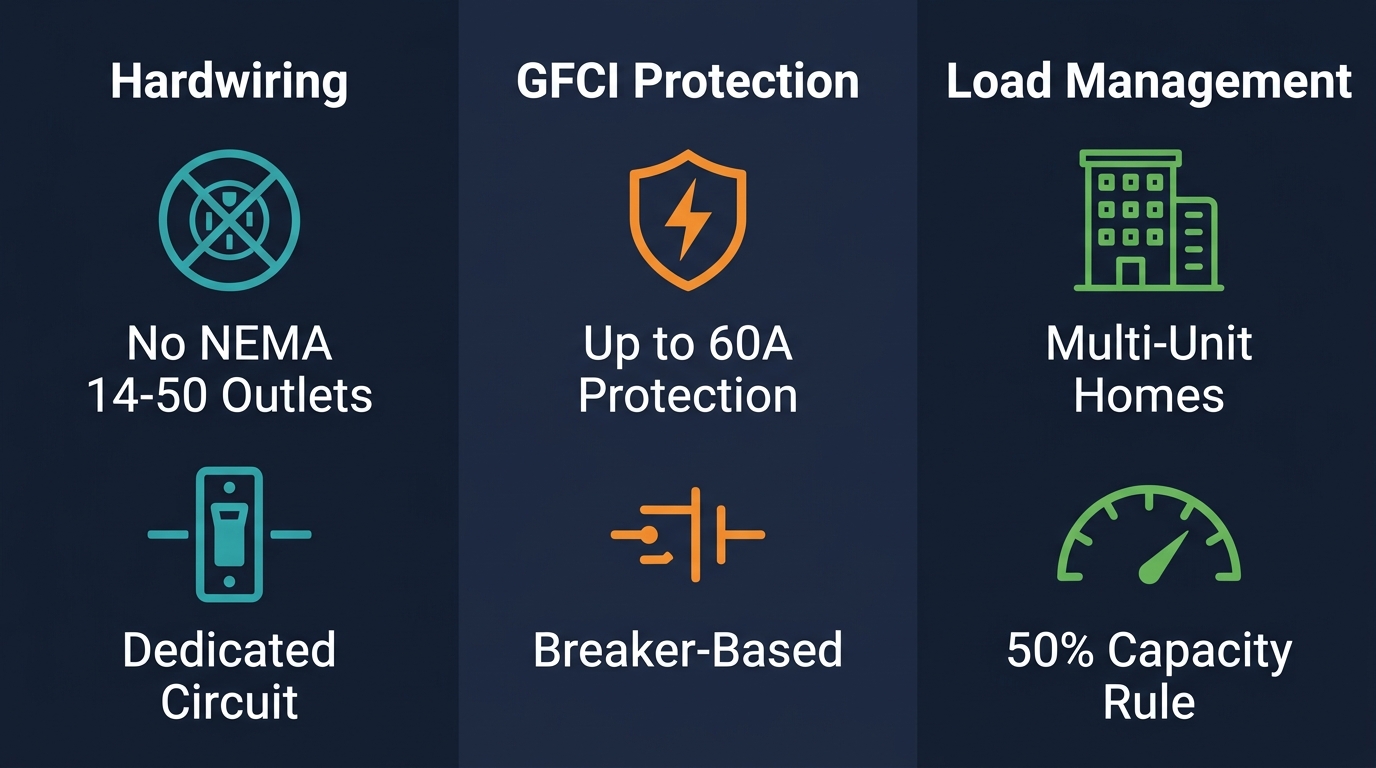
A major update under the NEC 2026 hardwired EV charger rules is the requirement for all new residential EV charging stations to be permanently hardwired, eliminating plug-in outlets like NEMA 14-50. This change mitigates the risks of loose connections and overheating. According to the National Electrical Contractors Association (NECA), hardwiring provides a more secure and durable connection, reducing failure points. For homeowners, this means all future EV charger installations must be direct-wired to dedicated circuits, ensuring a safer setup.
Another critical update in the 2026 national electrical code ev charger standards concerns the NEC 2026 GFCI protection requirements, which now mandate ground-fault circuit-interrupter protection for EV charging circuits up to 60 amps. This applies to both hardwired and plug-in installations, with exceptions for permanently connected equipment that already includes integral GFCI protection. The National Electrical Contractors Association emphasizes that GFCI protection greatly reduces electrical shock hazards by quickly interrupting power during a ground fault. Homeowners gain an extra layer of safety, especially in garages and outdoor areas where moisture is present.
For multi-unit residential buildings, the 2026 NEC introduces mandatory load management systems when the combined EV charging load exceeds 50% of the service capacity. This ensures the electrical infrastructure can handle multiple chargers without overloading circuits, preventing outages and potential fire risks. Additionally, the code requires continuous conduit from the electrical panel to the EV charging station, with a minimum conduit size of 3/4 inch for circuits rated above 40 amps. These requirements promote safer installations and simplify future upgrades.
These three code changes—hardwiring, GFCI protection, and load management—greatly improve safety and reliability.
For homeowners in California, the state has adopted the 2026 NEC with specific amendments. Review our EV charger installation California building code 2026 guide for state-specific requirements. Safety is our #1 priority, and our Licensed Local Electricians You Can Trust are fully trained on these changes. Staying current with these code changes ensures both safety and full compliance.
Why Hardwired Installations Are Becoming the Standard Under NEC 2026
The 2026 National Electrical Code EV charger requirements represent a pivotal shift for new residential construction in California. The state’s building code aligns with these updates, mandating that Level 2 EV chargers in newly built homes use hardwired connections rather than plug-and-cord setups. For a comprehensive breakdown of the specific mandates, see our article on EV charger installation California Building Code 2026.
Hardwired connections provide a permanent, secure link to the electrical system, drastically reducing the risks associated with loose plugs or receptacle failures. Because EV chargers draw high continuous loads, a hardwired circuit minimizes resistance and overheating at connection points, which is critical for fire prevention. Safety is our #1 priority, and the NEC 2026 hardwired EV charger rules directly support that principle by eliminating the weakest links in the charging chain.
Additionally, NEC 2026 GFCI protection requirements now apply to hardwired EV charger circuits. This added layer of ground-fault protection enhances safety by quickly interrupting power when a fault is detected, even in a permanently wired installation. The combination of hardwired connections and GFCI safeguards creates a robust safety framework that surpasses older plug-based designs.
Hardwired configurations also simplify integration with advanced load management systems. As homes incorporate solar panels, battery storage, and grid-interactive capabilities, a directly wired charger can communicate more reliably with smart panels and energy management controllers. This ensures that EV charging adjusts to real-time power availability, preventing overloads without the variability introduced by plug terminations.
Beyond safety and future-readiness, hardwired installations ensure consistent grounding and bonding, which is essential for high-power Level 2 chargers. Our licensed electricians verify proper conductor sizing, secure terminations, and adherence to NEC 625.42 continuous load requirements—calculating the circuit at 125% of the charger’s rated output to maintain safe operation.
As California moves toward broad EV adoption, the 2026 NEC hardwiring mandate prepares new homes for reliable, high-capacity charging from day one. We recommend proactively planning for a dedicated hardwired circuit as part of any new build or major renovation. With professional installation, homeowners can meet code requirements and enjoy safer, more dependable EV charging infrastructure for years to come.
Navigating GFCI Protection Requirements for EV Charger Circuits
Building on the 2026 National Electrical Code updates that mandate whole-home surge protection and expanded AFCI requirements, EV charger circuits now face specific ground-fault protection mandates. Understanding the 2026 national electrical code ev charger requirements is critical for anyone planning a new installation. These updates fundamentally change how we approach residential EV charging safety.
Under the NEC 2026 hardwired EV charger rules, all single-phase circuits rated 125–250 volts and installed for EV charging must include GFCI protection—even hardwired units. Previously, hardwired chargers were often exempt, but the revised code removes that distinction, treating cord-and-plug and direct-wired installations equally. This alignment reflects the broader 2026 national electrical code ev charger philosophy of eliminating exemption loopholes and ensuring consistent ground-fault protection across all installation types. Consequently, any ground fault, whether from damaged wiring or moisture ingress, triggers an immediate circuit interruption.
The NEC 2026 GFCI protection requirements mandate that the protective device detect leakage current as low as 5 milliamperes and trip within 25 milliseconds. This rapid response significantly reduces the risk of electric shock in garages, carports, and outdoor charging locations where moisture and weather exposure increase the likelihood of ground faults. While no safety measure can eliminate all risk, GFCI protection dramatically enhances user protection.
In California, the state adopts the 2026 NEC with potential local amendments. Our article on California electrical code changes details the surge protection and AFCI updates that parallel these GFCI provisions; we encourage readers to review that resource for region-specific guidance. Because adoption timelines can vary, we advise checking with your local building department to confirm whether the 2026 code is in effect and whether existing installations are grandfathered.
Industry organizations such as Independent Electrical Contractors (IEC) offer guidelines on proper GFCI breaker selection and circuit design for EV charger circuits. Similarly, the National Electrical Contractors Association (NECA) provides comprehensive resources on code compliance. We recommend working with a licensed electrician who can evaluate your panel, specify the correct GFCI breaker, and ensure the entire circuit meets current safety standards. All work we perform meets or exceeds electrical codes and industry standards.
With GFCI requirements clarified, the next section covers proper wiring methods to ensure full compliance.
The Qualified Person Rule: Can You DIY an EV Charger Installation?
After reviewing the LADWP and federal tax incentives, many homeowners ask a critical question: “Can I install my own EV charger?” The 2026 national electrical code EV charger updates provide a clear answer—only a qualified person is permitted to perform this work. For most homeowners, that means hiring a licensed electrician is not merely a best practice but a requirement.
The NEC defines a qualified person as someone with the skills, knowledge, and training to recognize and avoid electrical hazards. In residential settings, that standard is met almost exclusively by licensed electricians. According to the National Electrical Contractors Association (NECA), having rigorous hands-on experience and continuing education is essential to maintaining the proficiency needed for safe EV charger installations.
Attempting a DIY installation violates NEC 2026 hardwired EV charger rules and exposes homeowners to serious dangers, including electrical shock, arc faults, and fire. Improper connections can also void your property insurance, cause a failed inspection, and disqualify you from valuable rebates. For more on preventing hazards, we recommend consulting electrical safety resources like the Electrical Safety Foundation International.
Rebate programs reinforce the qualified person standard. Our own detailed LADWP rebate guide confirms that to receive the residential incentive, the work must be completed by a licensed local electrician. Integrating the NEC 2026 GFCI protection requirements ensures your circuit safely interrupts fault currents, but only a trained professional can properly install this protection.
At High Voltage Electrical, Safety is our #1 priority, and we are proud to be the Licensed Local Electricians You Can Trust in Los Angeles and throughout Southern California. Our fully trained technicians manage every installation with thorough permitting, load calculations, and strict code compliance. With lightning-fast response times and dependable, affordable high-quality electrical services with NO HIDDEN FEES, you can schedule same-day service and feel confident your home is protected. Knowing the qualified person rule, you’ll want to choose an experienced team that meets these standards – we cover how to select your installer next.
Permits and Inspections: Ensuring Compliance in California and Texas
Understanding the 2026 National Electrical Code (NEC) ev charger requirements is the first step. The next, equally important step is navigating the permit and inspection process in California and Texas. These local procedures ensure installations meet the highest safety standards, from GFCI protection to hardwired connections.
In California, residential EV charger installations are governed by the state’s Title 24 energy code and local building department permits. Typical permit fees vary by municipality, but homeowners can expect costs to be included in our transparent pricing—our installation cost guide breaks down average costs including permit and inspection coordination. Inspections verify compliance with the 2026 NEC, focusing on:
- Grounding and bonding to prevent electrical shock.
- GFCI protection for EV charger outlets (aligned with NEC 2026 GFCI protection requirements).
- Conductor sizing and conduit fill.
- Load calculations to ensure the electrical panel can handle the added load.
- Hardwired connections that follow NEC 2026 hardwired EV charger rules.
Our team handles permit application paperwork and fee submissions, eliminating administrative headaches for homeowners. We coordinate with local authorities to schedule inspections, ensuring code compliance. Proper permits and inspections may also be required to claim the federal 30C tax credit (up to $1,000), as our tax credit FAQ explains.
In Texas, the state adopts the 2026 NEC with specific amendments that may affect EV charger installations. Permit processes and fees are set at the municipal level; we include these in our upfront pricing. Inspections in Texas typically cover:
- Verification of proper disconnecting means.
- Compliance with NEC 2026 hardwired EV charger rules, which often mandate hardwired connections for higher amperage chargers.
- Ground-fault protection and weatherproofing.
- Adequate working space around the panel.
Our electricians maintain membership with the Independent Electrical Contractors Association, ensuring they receive ongoing training on 2026 NEC updates and state-specific amendments. We schedule inspections with local authorities and remain on site to walk inspectors through the installation, addressing any questions immediately. Additionally, many Texas jurisdictions require a permit record for insurance or future property sale documentation. Our team manages the entire permit application and fee payment process, so you don’t have to navigate local bureaucracy.
Safety is our #1 priority, and as Licensed Local Electricians You Can Trust, we handle every step from permit submission to final inspection. If you’re considering an EV charger installation, contact us for a consultation—our team will guide you through code compliance and ensure a smooth, safe home upgrade. With proper permits and inspections, you can also maximize available federal tax credits and local incentives. We make the process easy, so you can enjoy the benefits of home charging with confidence.
Preparing Your Home for Code-Compliant EV Charger Installation
Under the 2026 National Electrical Code EV charger guidelines, the first step is to evaluate your home’s panel capacity. Many homes with 100-amp service require an upgrade to 200 amps. We perform load calculations to confirm your panel can safely handle the added load.
A dedicated 50-amp circuit is mandatory for Level 2 EV charger installations. We use THHN wire in properly sized conduit and a 50-amp breaker, sizing the branch circuit at 125% of the charger’s continuous load as required by the latest code.
The NEC 2026 GFCI protection requirements may require ground-fault circuit interrupters on EV circuits. Safety is our #1 priority, so we ensure outdoor outlets are GFCI-protected, while hardwired chargers often avoid nuisance tripping.
For outdoor installations, NEC 2026 hardwired EV charger rules favor hardwired connections over plug-in units, reducing weather exposure and potential outlet failures.
Permits and inspections are typically required. Our Licensed Local Electricians You Can Trust manage all documentation, ensuring compliance with local amendments. Once your home is prepared, we provide dependable, affordable high-quality electrical services for a seamless installation.
Preparing Your Home for Code-Compliant EV Charger Installation
As the 2026 National Electrical Code EV charger standards take effect in California, homeowners must evaluate their electrical infrastructure before scheduling an installation. Preparing your home properly is the first step toward a reliable and lawful EV charging setup that meets updated safety requirements.
Start by having a licensed electrician perform a load calculation; older 100-amp panels often require an upgrade to 200 amps for safe, continuous operation. We ensure compliance with NEC 2026 hardwired EV charger rules and NEC 2026 GFCI protection requirements, which mandate hardwired connections and ground-fault circuit interrupter protection per Article 625.54. The Electrical Safety Foundation International (ESFI) recommends proper cord management and surge protection. Choose a dedicated parking location with a hardwired circuit that minimizes exposed cabling.
Once your home is ready, contact a licensed electrician—like our team—to perform the installation safely. Safety is our #1 priority, and all work meets or exceeds applicable codes.