
Table of Contents
- Whole House Rewiring: What Every Homeowner Should Know
- Understanding the Basics of Whole House Rewiring
- Deep Dive: Costs, Timelines, and Key Considerations
- Preparing Your Home for a Whole House Rewiring Project
- Advanced Considerations: Knob and Tube Wiring and Panel Upgrades
- Frequently Asked Questions About Whole House Rewiring
- Making the Right Decision for Your Home’s Electrical System
Whole House Rewiring: What Every Homeowner Should Know
Beyond panel upgrades, many older homes require a complete rewiring to meet modern loads. Whole house rewiring is the comprehensive replacement of your home’s existing electrical wiring system to ensure it meets current safety and capacity standards. This process eliminates outdated, potentially hazardous materials like knob-and-tube or aluminum wiring that are common in houses built decades ago.
Several warning signs indicate that a full house rewiring project may be necessary for your property:
- Frequent circuit breaker trips when using multiple appliances
- Flickering or dimming lights during normal operation
- Outlet covers that feel warm or hot to the touch
- Visible frayed, cracked, or cloth-wrapped wiring
- Reliance on extension cords for daily power needs
According to the Electrical Safety Foundation International (ESFI), outdated wiring systems are a leading cause of residential electrical fires across the United States. This makes proactive whole-home rewiring a critical investment in your family’s well-being and peace of mind. Safety is our #1 priority, and we approach every project with that commitment at the forefront.
Modern living demands more from your electrical infrastructure than ever before. A complete rewiring project properly prepares your home to handle EV charger installations, dedicated home office circuits, and high-power kitchen appliances without strain. Our licensed electricians ensure all work meets or exceeds electrical codes, with upfront pricing and NO HIDDEN FEES.
In the following section, we walk you through exactly how a professional comprehensive house rewiring services process is performed, from initial assessment to final inspection.
Understanding the Basics of Whole House Rewiring
Whole house rewiring is the complete removal and replacement of a home’s existing electrical wiring, cabling, and components. This comprehensive upgrade replaces outdated, potentially hazardous materials with modern, code-compliant systems designed to meet the demands of today’s technology. For homeowners in California and Texas, understanding this critical service is the first step toward ensuring the safety and efficiency of their property.
When we provide electrical rewiring services, our fully trained technicians evaluate several warning signs that indicate a full rewire may be necessary. Outdated wiring types, such as aluminum wiring or knob-and-tube systems, are primary candidates for replacement. Aluminum wiring, common in homes built during the 1960s and 1970s, is prone to overheating and poses a significant fire risk as it expands and contracts with use. Other clear indicators that your system is struggling include:
- Frequent circuit breaker trips when using common appliances
- Flickering or dimming lights, especially when another device turns on
- A persistent burning smell with no identifiable source
- Discolored or warm wall outlets and switch plates
- A reliance on extension cords due to an insufficient number of outlets
These symptoms suggest that a home’s electrical infrastructure can no longer safely support the load of modern electronics, from home office equipment to high-definition entertainment systems. The Electrical Safety Foundation International (ESFI) reports that aging and faulty electrical systems are a leading cause of residential electrical fires, making proactive rewiring a fundamental safety measure. Upgrading your wiring helps reduce the risk of fire and protects your family and property from preventable hazards.
Beyond safety, a complete house rewiring project dramatically improves your home’s functionality and value. A modern electrical panel and new circuits ensure that your system can effortlessly power everything from kitchen appliances to electric vehicle chargers without lag or interruption. This investment also resolves the daily frustration of tripped breakers and limited outlets, while potentially increasing property resale value. Buyers are often willing to pay more for a home with updated, safe electrical infrastructure that won’t require immediate costly upgrades.
A full electrical rewiring is a substantial undertaking typically completed over several days, but we minimize disruption through careful planning and efficient execution. Our process begins with a detailed assessment of your home’s specific needs, followed by a transparent walkthrough of the required work. All projects are handled by licensed, insured electricians who adhere strictly to all electrical codes and industry standards. We maintain our commitment to upfront communication, ensuring you understand each phase of the job with NO HIDDEN FEES on your final invoice.
Knowing these foundational details helps you recognize when a complete house rewiring is the right solution for your home. When a system shows persistent signs of failure, relying on temporary fixes is no longer a safe or cost-effective choice. Understanding these basics helps you evaluate when a full rewire is right for your home—next we walk through what the job actually involves, from the initial walkthrough to the final inspection that confirms your system is safe, reliable, and ready for decades of use.
Cost, Timeline, and Safety Considerations for Whole House Rewiring
While a whole house rewiring project can significantly enhance your home’s safety and functionality, it’s important to understand the associated costs, timeline and safety implications before moving forward. We at High Voltage Electrical believe in complete transparency, helping you plan your project with confidence.
Rewiring Cost Factors and Averages
For a typical 2,000-square-foot home, whole house rewiring costs between $8,000 and $15,000. Labor is the biggest expense, as electricians must fish wires through walls, floors and ceilings. Materials—such as Romex cable, outlets and a new panel—are next in line. Accessibility can increase costs if the workspace is cramped or requires opening many walls. Panel upgrades, often necessary to handle modern loads, also add to the total. We offer free estimates and transparent pricing with no hidden fees so you can plan your budget confidently. Every home is unique—factors like a second story, plaster walls or attic accessibility can shift costs up or down. Our licensed electricians assess your property and give you a straightforward estimate.
Project Duration and What to Expect
A complete whole house rewiring project typically takes one to two weeks. In a 2,000-square-foot home, the rough-in phase may require three to five days, with another two to three days for device installation and trim-out. Larger homes or those with difficult wall finishes can extend the timeline. Inspections, which we schedule on your behalf, may add a day or two depending on the local authority. From your first call, our lightning-fast response times bring an electrician to your door in 60 to 90 minutes to start planning. We work efficiently while keeping safety as our #1 priority, striving to minimize disruption to your daily life. After completing the wiring, we label your panel and verify every circuit is safe and operational.
Safety Risks in Older Wiring Systems
Older wiring systems such as knob-and-tube and aluminum wiring present significant safety hazards that make replacement essential. Knob-and-tube wiring, found in pre-1950 homes, lacks grounding and uses brittle insulation that can expose live wires. Aluminum wiring, installed in the 1960s and 1970s, expands and oxidizes over time, leading to loose connections and fire risks.
The table below contrasts the critical features of knob-and-tube wiring with modern electrical systems.
| Wiring Type | Era Common | Material | Key Safety Concerns | Recommended Action |
|---|---|---|---|---|
| Knob and Tube | Pre-1950s | Copper or aluminum, cloth insulation | Lacks ground; insulation degrades; not designed for modern loads | Replace with modern wiring as soon as possible |
| Aluminum Wiring | 1965–1973 | Solid aluminum | Overheating, oxidation at connections, fire risk | Assess by licensed electrician; consider full replacement |
| Modern Copper Wiring | 1970s–present | Solid or stranded copper, plastic insulation | Minimal when installed and maintained correctly | Continue regular inspections |
As shown, knob-and-tube systems offer no ground fault protection and limited capacity, creating a clear fire risk. According to the Electrical Safety Foundation International (ESFI), outdated wiring is a leading cause of house fires. Replacing it with modern grounded and arc-fault protected circuits dramatically improves safety.
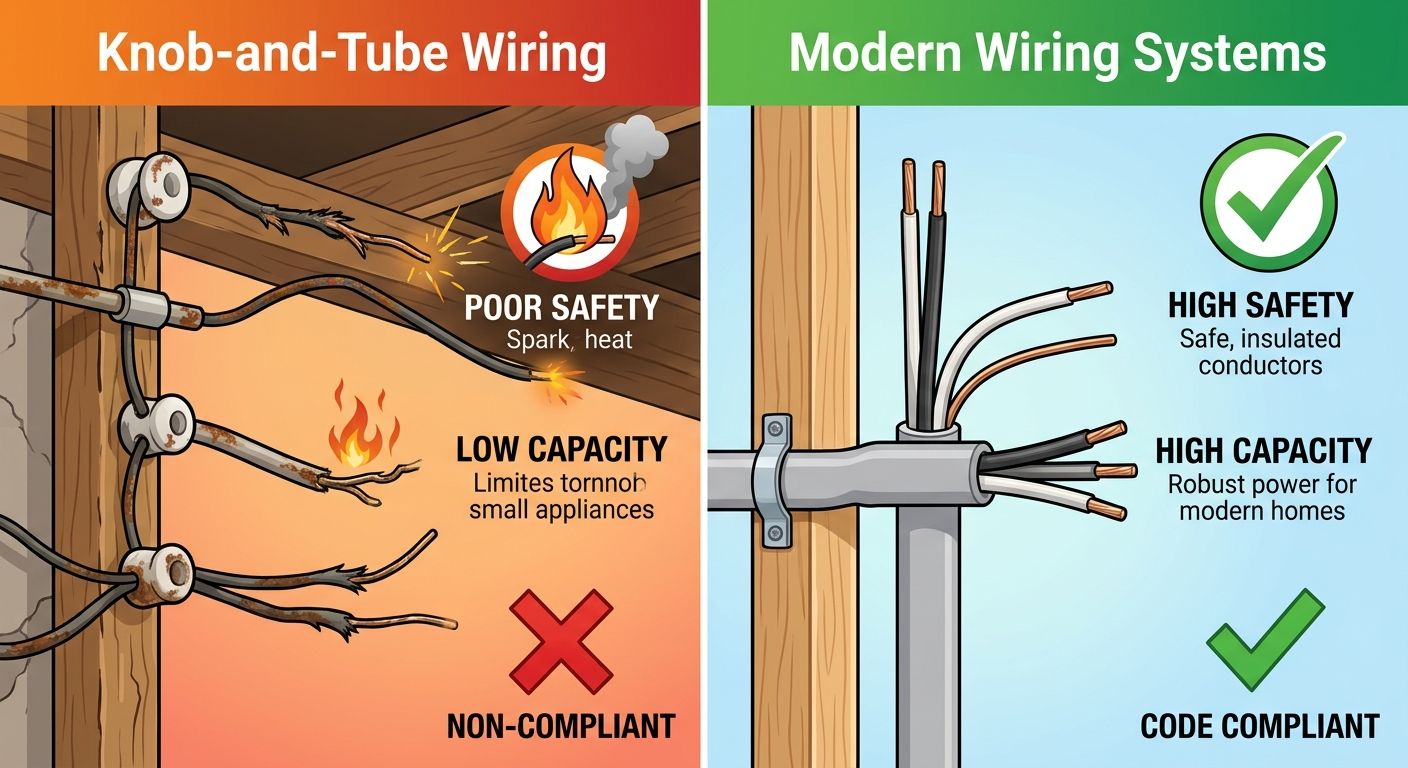
Knob-and-tube vs. modern wiring comparison highlighting safety improvements.
Aluminum wiring also requires expert attention. Our fully trained technicians perform complete aluminum wire replacement to eliminate oxidation hazards. By upgrading to modern copper wiring that meets National Electrical Code standards, you protect your home and gain the capacity for today’s appliances.
Understanding the costs, timeline and safety factors equips you to make a confident decision. In the next section, we detail the installation process and what to expect when working with a professional electrical contractor. For a free estimate, reach out today.
Preparing for Your Whole House Rewiring Project
Once you’ve decided that whole house rewiring is the right path for your home’s safety and electrical capacity, proper preparation ensures a smooth start. We understand this is a significant project, but with careful planning, you can minimize disruptions and look forward to a safer, more modern electrical system. A full rewiring touches every room, replacing outdated circuits, receptacles, and switches with new components that meet current code. Taking the time to prepare now will help our licensed electricians work efficiently and protect your belongings throughout the process.
Steps Before Rewiring Begins
The most critical administrative step before our team arrives is securing the proper permits and scheduling inspections. We typically coordinate much of this process for you, coordinating with local authorities to ensure all work complies with regional building codes. However, as the homeowner, your awareness and cooperation are essential. For example, an entity often recommended for its guidelines is your local electrical contractors association, which establishes best practices for safe installations. We’ll handle the technical filing, but you should expect a brief pre-project walk-through where we explain the scope, timeline, and any areas that need access.
On your end, physical preparation of the work area significantly streamlines the job. Start by clearing access to walls where outlets, switches, and the main electrical panel are located. Move furniture, electronics, and artwork at least three to four feet away from these zones, covering any remaining items with drop cloths to shield them from drywall dust. We will lay protective floor coverings in primary pathways, but removing fragile valuables from the work area entirely is always the safest approach. It’s also helpful to mark accessible routes from your electrical panel to the attic or crawl space, as our technicians often need to run new wiring through these chases.
Whole House Rewiring vs Partial Rewiring
The following table compares a full-scale rewiring project with a more limited, targeted approach to help you determine which solution best fits your needs.
| Home Square Footage | Average Cost Range (2025–2026) | Typical Project Duration | Major Cost Factors |
|---|---|---|---|
| 1,500 sq ft | $8,000 – $12,000 | 3–5 days | Number of circuits, accessibility |
| 2,000 sq ft | $10,000 – $15,000 | 4–7 days | Panel upgrade, number of outlets |
| 2,500 sq ft or more | $15,000 – $25,000+ | 1–2 weeks | Complex routing, multiple panels |
A whole house rewiring offers complete peace of mind by eliminating every length of outdated or potentially hazardous wire, which is often the best choice for older homes or full renovations. A partial rewiring addresses immediate safety concerns or supports a specific new appliance, such as an electric vehicle charger, but it does not modernize circuits in untouched rooms. For most homes built before 1980, we often recommend the comprehensive route, as mixing old aluminum or ungrounded wiring with new copper circuits can create inconsistencies across the system. Remember, we provide upfront pricing with NO HIDDEN FEES, so you can weigh these options transparently with our team.
Living Arrangements During Rewiring
The nature of a complete rewiring means your home will experience periods without power, and living there during the work can be disruptive. We cut power to specific circuits at a time, but when the main panel is being upgraded or replaced, a full-home outage lasting several hours is typical. Add to this the noise from drilling, the presence of our crew in most rooms, and the dust created when cutting into walls, and many families decide to stay with friends or book short-term accommodations for the busiest days. If you choose to remain on-site, designate a temporary living zone, such as a finished basement or a spare bedroom on a separate floor, where the work is already complete.
Before the project starts, discuss the daily shutdown schedule with our foreman. We keep essential appliances like refrigerators running whenever possible by isolating their circuits, but you should plan for meals that don’t require electric cooking and charge devices ahead of time. Safety is our #1 priority, so we cordon off active work areas to protect your family from exposed wiring and tools. If you have pets, arrange for them to stay elsewhere; the constant comings and goings and unusual sounds can cause significant stress, and we want to keep everyone safe while we work. Ultimately, about half of our clients stay home by establishing a comfortable base camp, while the other half find it easier to temporarily relocate.
What to Expect After the Rewiring
Once the last circuit is connected and the house is powered back on, the final and most important step is the formal safety inspection. A city or county inspector, arranged as part of our permit coordination, visits the property to verify that every outlet, switch, and breaker meets strict electrical code requirements. This impartial review confirms that your whole house rewiring was performed correctly, grounding is intact, and the new panel can safely handle its rated load. After passing inspection, we restore all outlet and switch plates to their final positions, and we walk you through your new system, labeling the panel clearly so you know exactly which breakers control which rooms.
While the electrical work itself is now protected and code-compliant, the cosmetic recovery is typically a separate effort. Our electricians cut precise, small access holes in drywall to fish new wires, but patching and painting these openings falls under a general contractor’s or painter’s scope of work. We can recommend trusted local professionals, but you should budget time and money for this finishing stage. With the construction finished and walls repaired, you’ll immediately enjoy enhanced benefits: a dramatically reduced risk of fire from faulty wiring, enough capacity to run modern electronics without tripping breakers, and a home value boost from documented, up-to-date electrical infrastructure. With your home prepped and inspections scheduled, you’re ready for the installation phase—covered next.
Advanced Considerations: Panel Upgrades and Aluminum Wiring
When planning a whole house rewiring project, it is essential to look beyond just replacing old cables. Two advanced considerations often arise: the need for an electric panel upgrade and the presence of hazardous aluminum wiring. We at High Voltage Electrical routinely address these issues, as they are critical to the long-term safety and efficiency of your home’s electrical system.
A panel upgrade becomes necessary when your existing service panel is outdated, undersized, or unable to support the demands of modern appliances and technology. Homes built decades ago were not designed for today’s high-powered electronics, EV chargers, and smart home systems. An overloaded panel is not just an inconvenience; it is a serious safety hazard that can lead to tripping breakers, flickering lights, or dangerous overheating. Upgrading your panel creates a stable foundation that supports new circuits and ensures your system can handle increased electrical loads safely. Our fully trained technicians can assess your current setup and recommend the right capacity for your needs.
The presence of aluminum wiring presents a unique set of challenges and risks. Commonly installed in residential properties during the 1960s and 1970s, aluminum wiring is prone to oxidation and expansion when heated. Over time, these properties can cause connections to loosen at outlets, switches, and within the panel itself. These loose connections create electrical resistance, which generates significant heat and substantially increases the risk of a fire. For this reason, replacing aluminum wiring is not just an upgrade—it is a critical safety measure. We offer comprehensive aluminum wire replacement as a core component of our house rewiring services, eliminating this hazard and replacing it with safe, modern copper wiring.
Integrating these advanced services into your project is a strategic investment in your property. A modern, code-compliant panel and the removal of hazardous aluminum wiring dramatically improve the safety of your home while increasing its market value. Every job is performed by our licensed local electricians, and we ensure all work meets or exceeds electrical codes and industry standards. Safety is our #1 priority, and this commitment guides every step we take, from the initial consultation to the final inspection of your new system. You can trust that your home is protected by dependable, high quality electrical work.
Looking beyond the initial installation, these upgrades provide the peace of mind that your home’s critical infrastructure is reliable for decades. With a new panel and copper wiring, the risk of electrical fires is greatly diminished, and your system is ready for any future technological additions. By addressing these advanced considerations now, you avoid costly emergency repairs later and create an inherently safer living environment.
With a clear understanding of why panel upgrades and aluminum wiring replacement are so vital, the next step is learning how we execute a project from start to finish. The following section will walk you through the typical scope and flow of a whole house rewiring project, so you know exactly what to expect when we get to work.
Frequently Asked Questions About Whole House Rewiring
Here are answers to common whole house rewiring questions.
How do I know if my house needs rewiring?
ESFI reports that flickering lights, frequent breaker trips, and burning smells are signs you need whole house rewiring. We can inspect your system.
How long does whole house rewiring take?
Whole house rewiring typically takes a few days to a week, depending on size and accessibility. We’ll provide a clear timeline before starting.
How much does whole house rewiring cost?
Cost depends on square footage and circuits, but we offer transparent pricing with no hidden fees. Get a free estimate for your exact cost.
Can I stay in my home during rewiring?
Yes, you can usually stay, though work areas may be temporarily closed. We minimize disruption and protect your property.
Do you offer rewiring services in La Puente?
Absolutely — we offer whole house rewiring and all electrical services in La Puente. Our Licensed Local Electricians You Can Trust are ready to help.
Contact High Voltage Electrical for a free estimate. Safety is our #1 priority, and all work meets or exceeds electrical codes and industry standards.
Take the Next Step Toward a Safer Home
Whole house rewiring in your home eliminates old, hazardous wiring and brings it to modern safety standards. Protect your family for decades — take the next step with complete rewiring services from High Voltage Electrical. We offer lightning-fast response times and a 100% satisfaction guarantee. Safety is our #1 priority — our Licensed Local Electricians You Can Trust deliver code-compliant, insured work. NO HIDDEN FEES — just upfront pricing and dependable results. Call (855) 501-7800 or schedule online for your free consultation. All work meets or exceeds electrical codes; results may vary.
Resources
- Get Safe Whole-Home Rewiring by Licensed Electricians
- Get Expert Electrical Rewiring for Safety and Savings
- Get Licensed Electrical Services in La Puente 24/7
- Get Emergency Electrical Services in Long Beach Fast
- Get 24/7 Electrical Services in Milpitas with Satisfaction
- Get Full Electrical Services in Santa Ana 24/7
- Get Full-Service Electrical Solutions in CA and TX
- Learn Electrical Safety from the Electrical Safety Foundation
- Discover Electrical Industry Resources from NECA